
Smokey Bear celebrates 80 years of prevention messaging

Smokey Bear’s first-ever appearance was on a poster approved in August 1944 to promote putting out campfires and preventing accidental fires.
(USDA Forest Service image)

August 2024 marks the 80th birthday of the U.S. Forest Service icon Smokey Bear. (Please note.) “The” is not Smokey’s middle name. While the blue jean clad, hat-wearing, bare chested bear does not have a real identity crisis, almost everyone (myself included occasionally) wants to add the extra syllable. Mickey the Mouse, Donald the Duck and Bugs the Bunny never endure such indignity, but Smokey is stuck with the innocuous, inaccurate noun marker.

Smokey first showed up in 1944 on a wildfire prevention poster from the U.S. Department of Agriculture dousing an unattended campfire above the text: Smokey says – Care will prevent 9 out of 10 forest fires! In 1947 the slogan changed to “Only YOU can prevent forest fires,” and in 2001 it was tweaked again to change the last words to “wildfires.”

The public service announcement message spread rapidly in 1950 after an orphaned black bear cub was named Smokey following his rescue from the smoldering ashes of a fire in the Capitan Mountains of New Mexico. The Forest Service took the injured baby bruin to the Smithsonian National Zoo where he became symbolic of efforts to prevent wildfires. Smokey lived at the zoo until his death in 1976. The “the” in his name is attributed to a popular song written in 1952, according to the smokeybear.com webpage.

Worries about wildfires began in earnest following the bombing of Pearl Harbor in 1941. Fears of incendiary bomb attacks on the US mainland brought attention to the possibility of devastation and death throughout the nation’s forests.

In 1942 the popularity of Walt Disney’s movie Bambi stoked America’s interest even more. The company loaned its cartoon character images to the effort, but only for one year. Smokey was created to carry the torch for the “please don’t be careless” message originally championed by Bambi, Thumper and Flower. (Those one-name stars apparently never needed deer, rabbit or skunk last names.)

I remember Smokey from my childhood, and he certainly helped me understand the danger of accidental fires, careless burning, and potential destruction. In the late 1990s, two Missouri farms where I hunted deer were burned extensively in separate wildfire incidents the same summer, so I have some first-hand experience.

I’ve long known about nation’s smoke jumpers, and locally our rural fire protection districts spend their summers chasing “brush fires,” but it seems like the wild blazes continue to get bigger and badder every year. Smoke from California, Colorado and Canada routinely finds its way into our Midwest weather forecasts. These uncontrolled burns are measured in square miles now rather than acres.

Whether the blame belongs to the heat, drought and other factors of a changing climate, or neglected and unfunded maintenance, we must all acknowledge Smokey’s birthday by exercising extreme caution and following his suggestions.

Campfires are a great component of an evening outdoors, but you must make sure campfire sites are appropriately located, fire pits are correctly designed and assembled, fire size remains manageable, and a plan for extinguishing or emergencies has considered all contingencies.

Backyard burning projects are another activity fraught with fire danger. Before you begin, check weather conditions and local ordinances. Make sure there are no overhead branches or power lines. Keep a water source and shovel handy, and make sure your fire size remains manageable. Always stay with your fire until it is completely burned out, and repeatedly douse and stir the ash pile to eliminate all embers.

To learn more about fire (including its benefits), prevention tips, Smokey’s story, and some fun new PSA videos, visit smokeybear.com.

John Winkelman has been writing about outdoors news and issues in Jefferson County for more than 30 years and was the Associate Editor for Outdoor Guide Magazine.

Organization works to gain access for disabled hunters and youth; Fundraiser Aug. 17

Special track wheelchairs allow people with mobility issues to access woods and waterways like the stream at Montauk State Park.

Everyone should have the opportunity to enjoy the excitement and challenges that hunting and fishing have to offer. The Missouri Disabled Sportsmen group works to reduce barriers for people who want to enjoy the woods and waters.

Founded in 2008, the statewide organization relies on volunteers and donors for 100 percent of the experiences it creates for people with mobility issues, as well as youth and people with terminal illnesses. An upcoming hunting event in Bloomsdale will be hosted during the first anterless-only season this fall.

Registration is through the state Department of Conservation online application process. Twenty hunters will be given the opportunity to participate in the Marvin Drury Memorial Antlerless Deer Hunt October 11-13 at the Drury family property. The Missouri Disabled Sportsmen organization will provide meals, experienced mentors, blinds and meat processing for participants.

Rich Cook of Crystal City recently volunteered with the organization and is looking forward to helping a hunter at the upcoming hunt and other outings in the future.

“I’m willing to give up my opening day to help someone else,” he said. “I could go and take another deer to hang on the wall in my basement, but seeing the excitement for someone else is a lot more thrilling.”

Cook said he began following Missouri Disabled Sportsmen on Facebook. When he saw pictures they posted of anglers in wheelchairs that could go into the water at his beloved Montauk State Park, Cook was hooked.

Through partnerships with volunteers, state agencies, private landowners, and other organizations, the 401(c)3 not-for-profit has offered deer, pheasant, turkey, and waterfowl hunting outings, along with fishing and other outdoor educational events throughout Missouri and around the country, said Jeff Roth a Ste. Genevieve County resident and organization vice president.

“It all started with a deer hunt, then more and more people were interested,” Roth said. “I have beagles, so we’ll go rabbit hunting. I have the stuff for waterfowl, so we have goose hunts. I like predator hunting. We pretty much can make anything happen. If they want to go squirrel hunting, we’ll go squirrel hunting.”

The group’s primary fund-raisers is scheduled for Saturday, August 17, with a fish fry, auctions, raffles, and a poker run for Jeeps and side-by-side sports utility vehicles. The third annual “Making it Possible” event begins and ends at the Knights of Columbus Hall in Bloomsdale.

The fish fry meal will be available from 2 to 6 p.m. and the band Kicking Kountry will play from 7:30 to 11:30 p.m. From 6 to 7:30 p.m. the silent auction, live auction, and several fund-raising games will take place, Roth said.

Registration for the poker run begins at 10 a.m. and each $15 registration includes a ticket for the fish fry meal. Additional poker hands may be purchased for $5 each. Proof of insurance is required, and all UTVs must have a flag or slow-moving vehicle placard.

Roth said the fund-raiser evolved from an appreciation event he hosted for volunteers and the disabled hunters the organization helped.

“I fish a lot, so my friends and I always have a lot of fish, so we started the fish fry dinner several years ago. One year my brother said, ‘you ought to get a band.’ The next year the band had such a good time they said, ‘you ought to turn this into a fund-raiser.’ Now it’s our biggest event of the year,” Roth said. “The Jeep and UTV poker run is a new thing this year.”

The auctions, raffles and games rely on donations from many of the organizations sponsors. Items that are available can be viewed on the group’s Facebook page and raffle tickets may be purchased online through the social media site until August 13.

For more information on Missouri Disabled Sportsmen and its upcoming events visit missouridisabledsportsmen.org or call Roth at 660-346-7476.

John Winkelman has been writing about outdoors news and issues in Jefferson County for more than 30 years and was the Associate Editor for Outdoor Guide Magazine.
Upcoming webinar to discuss invasive plants and deer management

A program that combines deer hunting and invasive species appears almost tailor-made for me by featuring two of my top topics for outdoor news.

The free Invasive Plant Control for Deer Management webinar begins at 6 p.m. on Tuesday, July 30. Use this link to access the Zoom call at meeting time: short.mdc.mo.gov/4XS.

The program is the third of at least four cooperative presentations by the National Deer Association and the state Department of Conservation this year. A recording will be available through YouTube in the near future. I have watched the two previous discussions and found them to be informative and enlightening. Both are just more than an hour long.

Chronic wasting disease was the first topic covered. Kevyn Wiskirchen, a wildlife programs supervisor from the conservation department, led the discussion with updated details on the effect the disease is having on deer herds in Missouri and nationally. I like to believe I am fairly well versed in the topic, but I discovered several new notes to add to my understanding.

The greatest prevalence of CWD in our state is in the cluster that includes Jefferson and Ste. Genevieve counties. At 1.76 percent, the ratio of positive tests compared to all sampling in the area is just a nudge ahead of the Linn and Macon counties region where the disease was first discovered in free-ranging deer a dozen years ago.

While that number can be looked at as good or bad news, it pales in comparison to places like southwest Wisconsin where more than half of the mature bucks and nearly 40 percent of does test positive for the disease.

Aggressive efforts to identify and limit spread of the disease in Missouri seems like the best strategy. Political pressure in the Badger State – when CWD was first found there – forced a wait-and-see approach that can be attributed to the current crisis.

I had known Wisconsin’s wasting disease woes, but I learned about trouble in Tennessee from the presentation. Just a few years ago the state claimed no cases, but also admitted that testing was only slightly more than non-existent. The “what you don’t know won’t hurt you” plan came unraveled when 10 positive cases were discovered there in December 2018. Now the prevalence east of Memphis is recorded as high as 18.4 percent.

The other previous program in the series was directed to farmers and property managers regarding crop damage. Cheyne Matzenbacher, the deer outreach specialist in southern Missouri for the National Deer Association, led the discussion for that meeting, which was recorded in early June. Suggested methods for protecting corn, soybeans and other crops from deer damage included fencing and natural barriers, harassment with noises and other nuisances for the animals, repellents that can reduce attractiveness of the growing plants, and trapping or harvest options among other ideas.

“Having zero deer damage to your crops is not a realistic or achievable goal,” Matzenbacher says. “Light deer browse is OK, and in some cases even good for your crop. None of the methods is foolproof, but they can be used to help reduce deer-crop damage to a low, tolerable level.”

My favorite item in the presentation was a comment at the end when the presenters asked for the farmers and landowners who viewed the information to share any tips and tricks they know to help control deer damage. Telephone numbers and email addresses for the specialists were available at the end of the show.

The fourth webinar in the series is scheduled for September and will focus on hemorrhagic disease in deer. Save this link and click on it on Sept. 10 at 6 p.m.: short.mdc.mo.gov/4Xq.

John Winkelman has been writing about outdoors news and issues in Jefferson County for more than 30 years and was the Associate Editor for Outdoor Guide Magazine.
Managed hunt application process in July marks the start for deer season dreams

Deer season unofficially begins in July when hunters who want to participate in the managed hunts offered throughout the state must apply for the opportunity. Other hunters would do well to get a copy of the annual regulations booklet, which is now available online and wherever permits are sold.

The managed hunt application process is open through July 31. With more than 100 options to consider, it requires some study to make an informed choice of the one hunt to try. Hunters who apply, but do not get selected, earn preference points to improve their chances for future drawings.

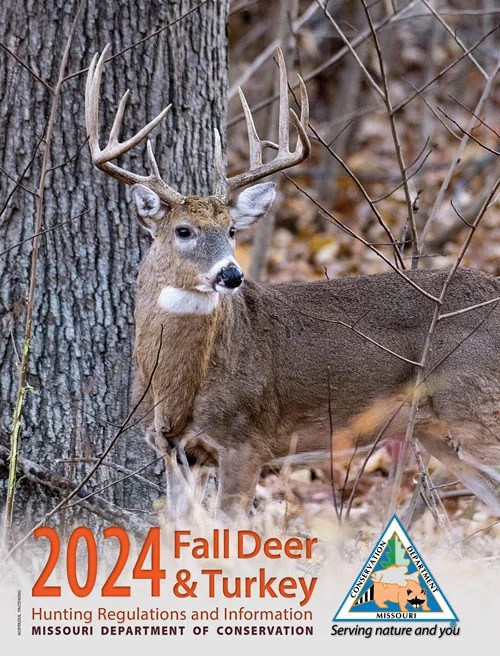
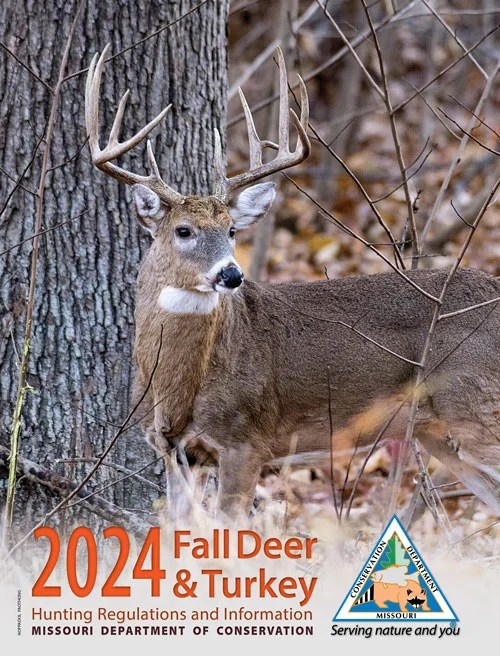
The 2024 Fall Deer and Turkey Hunting Regulations and Information booklet is now available from the state Department of Conservation. It is a must-read for all hunters, and includes information on all managed hunts available in the state.

None of the managed hunts are in Jefferson County, but there are several to consider in neighboring counties if you base your choices on proximity to home. Because managed hunts are utilized for deer population control, St. Louis County has the most. A muzzleloader hunt is planned at Robertsville State Park in Franklin County, and a modern firearms hunt is scheduled at St. Joe State Park in St. Francois County.

The most interesting opportunities are archery hunts at several St. Louis County parks, including Jefferson Barracks where the abundant deer have quite a reputation for their numbers. Creve Coeur, Greensfelder, McDonnell and Queeny parks also will invite bow-and-arrow hunters to help thin the herd.

The number of hunters selected for each hunt range from five at McDonnell Park to 45 at Greensfelder, but what really makes a difference is how many people apply. Last year 389 applied for Creve Coeur, 205 for Greensfelder, 256 at Queeny, and 997 took a shot at getting picked for 20 spots at Jefferson Barracks.

Hunters can take up to three deer during the 25-day season in the county park program from Oct. 21 through November 15, but they must check-in at least one antlerless deer before they can harvest an antlered buck. Selected hunters must attend a mandatory pre-hunt orientation to participate.

Other archery hunting opportunities of interest in St. Louis County – for their potential and proximity to Jefferson County – include three, week-long hunts at Fabick Nature Preserve near Fenton; two, two-week seasons at the massive Columbia Bottoms area at the confluence of the Missouri and Mississippi rivers, and five different events at Rockwoods Range and Rockwoods Reservation near Eureka.

Muzzleloader hunting opportunities, like the one mentioned above at Robertsville, are also offered at Babler and Castlewood State Parks and Forest 44 Conservation Area. Last year 36 hunters took 44 deer in the hunt at Robertsville State Park.

Most interesting and most challenging is a hunt at Pelican Island in north St. Louis County. Those 2,200-plus acres are usually only accessible by boat. There were 219 applicants for 80 spots last year, and 44 deer were harvested in the three-day hunt.

There was not a modern firearms hunt at St. Joe State Park last year, but a similar event was held at nearby St. Francois State Park in 2023. The two-day hunt on Nov. 9 and 10 this year will allow 30 hunters to take up to three deer each, but two antlerless deer have to be checked in, before taking an antlered deer. Difficult weather conditions can spoil a two-day hunt pretty easily. Forty-eight hunters harvested only nine deer at St. Francois last year.

The program also has managed hunts for youth, people who have never hunted, and for anyone who is required to use a wheelchair. The application process is online at the state Department of Conservation website. Managed hunt statistics including the numbers of people who apply and their success rates, can also be found at mdc.mo.gov. All of the hunts are outlined in the annual 2024 Fall Deer and Turkey Hunting Regulations and Information booklet.

John Winkelman has been writing about outdoors news and issues in Jefferson County for more than 30 years and was the Associate Editor for Outdoor Guide Magazine.
Comment period open for proposed permit price increases

The state Department of Conservation is proposing rate increases for hunting and fishing permits for 2025. If that news sounds familiar, it’s because the state raised the rates for most licenses this year, after nearly two decades years without a change.

More regular increases to keep pace with inflation and rising costs is probably the right strategy, but it is likely to get negative attention when adjustments are announced annually. The process requires public input, so you can use this link to comment until Aug. 1.

The cost of operating places like the Bennett Spring Fish Hatchery to have trout available for anglers is one of the many reasons permit prices may be increased again this year.

The majority of the changes will affect non-residents, and even the department’s biggest detractors are usually on board for putting the pinch on people from outside of Missouri. It is one of the most common complaints I hear about hunting permit prices. “We don’t charge as much as” Iowa, or Illinois, or etc. do when our state’s hunters and anglers travel there for outdoor recreation.

The rationale in Missouri has been that most of the non-residents who come to the Show-Me State are family members and former residents. Permit prices should not be a major deterrent to allowing an opportunity for reunions that follow the rules. The proposed increases for 2025 still keep the state below the average rates that our eight neighbors charge us when we visit.

If approved by the conservation commission in September, non-residents will pay $243.50 for a spring turkey hunting permit compared to the surrounding states’ average of $255.22. Firearms deer hunters from out of state will be asked to buy an any-deer permit for $288, which still is much lower than the $374.31 average of our neighbors for a reciprocal opportunity. Archers face the greatest disparity with a recommended non-resident permit price of $288 to hunt in Missouri compared to $436.69 elsewhere.

Residents will be asked to pay more for their annual trout permits with a proposed hike from $10 to $12. Because trout are a non-native species, all fish caught by trout anglers in Missouri have hatchery heritage. In most cases they are stocked regularly for anglers. The annual permit is required for fishing in Lake Taneycomo and other waters outside the state’s trout parks. Anglers in the trout parks must purchase a daily tag for $5.

“Costs continue to increase for habitat management and improvements, cost-share funding, fuel, equipment, contract and construction work, and other aspects of the work MDC staff does,” said former conservation department director Sara Parker Pauley. “We need to keep up with rising costs and can do that by adjusting permit prices. Even with the minor price adjustments we propose, Missouri permit prices remain good bargains when compared to surrounding states.”

The state Conservation Commission gave initial approval to the proposed permit price adjustments at its May 24 meeting. Public comments are welcome through August 1. Online input will be considered by the conservation commission at its meeting September 6. Visit mdc.mo.gov/contact-engage/public-commenting-opportunities to submit comments. If approved, the price adjustments would go into effect on Jan. 1, 2025.

According to conservation department data, permit sales account for about 16 percent of the department’s budget. The Conservation Sales Tax provides about 61 percent, and federal taxes and reimbursements make up about 17 percent. Sales and rentals, interest, and other sources result in the remaining 6 percent. On average, Missouri residents pay $26 annually for conservation through the one-eighth of one cent sales tax.

John Winkelman has been writing about outdoors news and issues in Jefferson County for more than 30 years and was the Associate Editor for Outdoor Guide Magazine.

Research begins to study impact of black vultures on livestock

Black vultures (pictured) and turkey vultures are important cleanup crews for dead animal carcasses.

Like a parent who would not select a favorite kid, I have trouble isolating one bird as the best of the bunch. I’m frequently wowed by the woodpeckers that flock to my suet feeders in the winter. I’m captivated by the brilliant colors of the cardinals, blue jays and goldfinches. Obviously, eagles and other big birds of prey like hawks and owls soar on the cool meter.

Then there are the great game birds like geese and grouse or quail and quacking ducks. Everything is impressive about wild turkeys. In Missouri there are more than 200 different species identified in the state Department of Conservation‘s online field guide from gulls to great blue herons.

Still when forced to pick, I usually give the nod to vultures. They are impressive in size, have fascinating habits, and provide an important environmental service that no one else would enjoy. But now comes news that one of the two species in Missouri is a marked man. Turkey vultures can be seen soaring anywhere in the state and even get your attention when their shadows eclipse the sun. Black vultures, which are more rare here, are the ones targeted for the trouble they cause.

A multi-year study was launched this spring by the conservation department and the United States Department of Agriculture to better understand black vulture movement and human interactions. The species may prey on newborn calves, their vulnerable mothers, and smaller farm animals such as baby lambs and goats.

“Black vulture populations in Missouri have been growing and expanding in recent years,” said Alan Leary, conservation department wildlife management coordinator. “As a result, more landowners are reporting conflicts with them.”

A research study is asking people who see black vultures with wing tags, like No. J15, to report the sightings online to track habits, range and nuisance issues. (Missouri Department of Conservation photo)

The study captured 89 black vultures near the Missouri-Arkansas border and marked them with a white tag on their right wing. The tags may be visible from below while the birds soar or while birds are perched. Twenty-eight vultures were also equipped with radio transmitters to track their daily movements.

All sightings of tagged black vultures should be reported at reportband.gov. Information can also be emailed to USDA biologist Eric Tillman at Eric.A.Tillman@usda.gov.

While the two are very similar looking, turkey vultures are much more common in Missouri, and they are slightly larger with a wingspan of up to six feet; the black vulture stands a few inches shorter with a wingspan of less than five feet.

The black vulture flaps its wings often, while the turkey vulture soars almost effortlessly when it finds rising summer thermals. The turkey vulture’s silhouette in flight is a V shape, while the black vulture holds his wings in a flat line. Up close, the big difference is head color. A turkey vulture’s bald pate has distinct red color, while the black vulture’s head is black or gray.

The turkey vulture hunts by sight and smell and can spot potential food up to two miles away. The black vulture relies on his keen eyesight to find food, and they frequently look for turkey vultures already dining on something. The black vultures are smaller but they are not shy, so they challenge and chase away the turkey vultures. The two share the curved beak look of other predator birds like eagles and hawks, but they use the tool differently. The hook is used for holding and tearing flesh.

Both vultures’ disgusting dining habits come in handy as a means of defense. Their projectile vomiting skill allows them to summon their supper and spit up to six feet with deadly accuracy.

Vultures play an important role in nature by eating carrion, or dead animals. Vultures have acids in their stomachs that metabolize diseases, such as rabies, and remove the contagions from the environment.

With all their positive attributes, they are hard not to like, so hopefully the new study finds common ground for the big birds and the farmers who are concerned about the potential for livestock losses.

John Winkelman has been writing about outdoors news and issues in Jefferson County for more than 30 years and was the Associate Editor for Outdoor Guide Magazine.

Find a new spot to take advantage of Free Fishing Days

Tywappity Community Lake is one of hundreds of places in Missouri featured in the annual Fishing Prospects that can provide a place for Free Fishing Days fun.

Annual Free Fishing Days in Missouri– and most other states — provide novice anglers the opportunity to try the sport without having to purchase the required permits. The hope of course is that they will get hooked on the idea and plan more trips in the future.

On June 8 and 9 anyone may fish in the Show-Me State without a permit, but all other regulations remain in effect, including limits on size and number of fish. Free Fishing Days takes place statewide each year on the Saturday and Sunday following the first Monday in June.

Equipment loaner programs at local libraries allow participants to get started with minimal monetary investment, but the real issue for most aspiring anglers is determining where to go. The free MO Fishing app from the state Department of Conservation highlights hundreds of places, and it offers detailed reports for many of the state’s lakes and rivers.

The directory identifies places including tiny ponds on conservation property. The best information is limited to the biggest bodies of water highlighted in an annual report called Fishing Prospects, assembled by conservation department biologists and other staff members. A satellite map with each location on the app provides a glimpse at the accessibility of the water and features like docks and jetties.

The app does not include municipal ponds like the lakes at Arnold City Park or Larry Crites Memorial in Festus. Those two places provide easy accommodations, but they also face significant fishing pressure, and fewer other fishermen is almost always a better situation.

Jefferson County does have several access points on the Meramec, Big and Mississippi rivers but those areas can also get crowded with anglers and others enjoying the atmosphere provided by cool water in the summer time.

Beyond the county’s borders, the public possibilities proliferate. Personally I can speak for a few places where I have found success. Council Bluff Lake near Belgrade in Iron County was a long-time favorite, but I haven’t been there for several years. It’s clear, deep water provided challenges, but good fishing too.

Palmer Lake, a smaller body of water near Council Bluff, does not have the same easy access as its nearby neighbor, but that can be a good thing for the aforementioned reason of fewer other fishermen. It also has been a while since I’ve been there, but I remember liking the lake and catching fish there.

More recently I have had success at two similar lakes in the opposite direction. Whiteside Lake near Troy, Missouri, and Vandalia Community Reservoir are both hours north of Jefferson County, but are worth the trip for fishing fun.

None of those personal favorites are mentioned in this year’s Fishing Prospects, but many others do get the benefit of detailed analysis. The August A. Busch Memorial Conservation Area in St. Charles County has dozens of lakes and ponds, which are managed for different fishing options.

One of the largest on the property is Lake 33, and it gets significant attention in the prospects report. Lake 33 is known for big largemouth bass. All three catfish species are present in Lake 33 with channel catfish over 10 pounds available and flatheads over 20 pounds possible. Hybrid striped bass stocked in the lake have the potential to get really big as evidenced by their 20-inch minimum length limit.

Perry County Community Lake also has had hybrids stocked at a rate of 1,000 per year for nearly 20 years. “Each year, multiple anglers report catching hybrid striped bass greater than seven pounds,” according to the annual prospects.

I recently had the chance to fish at Tywappity Community Lake near Chaffee. The 37-acre reservoir offered some fast action for largemouth bass, and the prospects report matched my success. I plan to return for a chance to fish for the 8- to 10-inch bluegill and redear sunfish mentioned in the report. Channel catfish are stocked annually and have a 16-inch minimum.

One last spot to mention is Towell Lake at Little Prairie Conservation Area between St. James and Rolla. It has been a couple of years since I was there, but the prospect report has me wanting to give it another look soon. “Recent efforts to control aquatic vegetation has been successful and will continue.” My experience there found good fishing when you could get around all the algae.

The MO Fishing app is available on Google Play and the App Store.

John Winkelman has been writing about outdoors news and issues in Jefferson County for more than 30 years and was the Associate Editor for Outdoor Guide Magazine.

Jefferson County’s annual bear visit could be early this spring

This Missouri Department of Conservation photo by Noppadol Paothong shows two young black bears are on the move in the spring. Jefferson County is likely to see a similar visitor soon as young males look for new territory.

Because it seems like it’s been spring since the end of February, it’s not a surprise that it feels like summer already, and occurrences you wouldn’t expect until Memorial Day are already on the radar.
Jefferson County conservation agent Cpl. Lexis Wilson said she received a call last week from someone curious about the potential for bear sightings. Historically that hysteria is more likely in late May or early June.

Actually, we hadn’t seen any black bears in these parts for more than 100 years, but a restored population in the southern third of Missouri has started a new trend. Over the past 10 years at least one wandering bruin has made an appearance in our area each spring. In most cases they return to the more remote woods of the Ozark highlands when they find our accommodations less than appealing. Wilson says residents need to make sure we keep the place unattractive to them.
“I’ve made these bears my mission. Email, call or text anytime you have information to share,” she said. “As long as it is not causing any trouble, we just want to know about it. If one gets into your trash one time and moves on, that is not a nuisance bear.”
Reaching out to our local conservation agents is the first place to turn for concerns or if you suspect a bear or bear damage on your property. You can call or text Wilson at 314-696-9425 and agent Ben Bardot at 314-954-5697. Send email to lexis.wilson@mdc.mo.gov or benjamin.bardot@mdc.mo.gov.

“They are like teenage boys. They are always looking for something else to eat. Take down your bird feeders and stop feeding squirrels or other critters,” Wilson said. “Bears are like very large raccoons. Anything that smells like food is going to get their attention.”

The other misinformation Wilson and Bardot work hard to dispel is the danger of the annual bear visits. They are not going to hurt people or pets as long as we learn to live with their presence during their short visits.

“They are just bears being bears, looking for food and new homes,” Wilson said. “They are docile by nature and want to avoid interaction with people.”

Another reliable resource to learn more about our bears is an organization and website called bearwise.org. A collective group of wildlife agencies and national experts, the group provides trustworthy information and regular updates through an email newsletter.
The mid-March missive mentioned the potential for early birds, err bears.

“The US Weather Bureau reports that after a strong El Nino helped produce the warmest winter on record in the lower 48 states, spring is arriving up to three weeks early in much of the country,” the newsletter stated. “Below-average snowfall, warmer temperatures and an early start to the growing season has bears across much of the country waking up early as well, and looking for food.”

That’s the key to protecting bears from us. Don’t provide easy-to-find food sources for them. Our conservation agents and the wildlife biologists at bearwise.org offer the same important tips.

  • Store garbage inside a secure building until trash pick-up day.
  • Keep your grill clean, covered and indoors if possible when not in use.
  • Don’t leave food for pets, strays or other animals outside. Feed pets a portion at each meal and remove the empty containers.
  • Refrain from using bird feeders in bear country from April through November.
  • Use electric fencing to keep bears away from beehives, chicken coops, vegetable gardens, orchards, and other potential food sources.

“Bears have great memories, so bears that learned to rely on high-calorie, human-provided food sources last year make a beeline for the bounty,” the bearwise.org April newsletter stated. The site also offers free downloadable documents to “Attract Birds, Not Bears,” and checklists to make sure your home and travels are bear prepared.

John Winkelman has been writing about outdoors news and issues in Jefferson County for more than 30 years and was the Associate Editor for Outdoor Guide Magazine.
Misinformation about snakes adds to plethora of questionable “facts”

The periodical cicadas have arrived. I found my first one on Friday by the big oak tree in our front yard. Enjoy them while they last; it will be 13 years before they return.

While I realize that I do not have the qualifications or inclination to dispute all or even most of the misinformation that is widely shared these days, I am willing to try occasionally to be a voice of reason. And there is some significantly unreasonable news circulating these days.

Multiple times this spring I have seen on social media – and heard in-person from someone with similar insider-information – that venomous copperhead snakes love cicadas. The post goes on to warn people to keep their kids away from trees during the upcoming 13-year visit of our local brood of big bugs.

First of all there is no doubt that copperheads, like nearly every other species of reptile and most wild creatures from birds to bears, will gorge themselves on the big insects when they exit the earth in the coming days. But the likelihood of snake bites increasing because of it is preposterous.

The suggestion to keep your children away and protect yourself by avoiding trees is nearly as mind-boggling.

“Sorry kids, for the next six weeks are you much safer in the basement playing your video games.”

Young people face greater risks from watching YouTube. This is arguably the most beautiful time of the year; we should be encouraging everyone to get outside. Take someone toward the trees to look for cicada exoskeletons or maybe try to catch one of the harmless bugs for an up close evaluation. It will be 2037 before the chance will come back again. Kids should be prompted to find insects and other natural wonders.

The May edition of the Missouri Conservationist magazine has arrived, and it includes a photo feature and story about fireflies. The images captured by nationally acclaimed wildlife photographer Noppadol Paothong include an evening meadow aglow with lightning bugs and a detailed sequence of one of the insects taking flight.

Those sights are becoming increasingly rare as habitat loss, light pollution, and pesticide proliferation limits opportunities for kids to see the summer show. I can still joyfully remember chasing and catching lightning bugs with my cousins and friends, a long time ago.

“If a field where fireflies live is paved over, the fireflies don’t migrate to another field. They just disappear forever,” Paothong writes. “You can help them by creating habitat in your own backyard. It’s as simple as eliminating or reducing pesticide use, leaving leaf litter and wild edges for habitat, and reducing light pollution so they can find each other during the breeding season.”

Fortunately no one is purposefully killing lightning bugs. A few get left in jars for far too long, but they do not face the perils and persecutions of the aforementioned snakes. Even the venomous ones are much more likely to be victims rather than villains. Still people take pride and joy in killing them.

Spring weather may bring snakes close to homes, but most are harmless, even if they are five feet long.

This time of year you may encounter snakes when you go outside, especially if you head toward woods and water. Earlier this month we had a big black rat snake visit our house. I think he or she was intent on investigating a nest of recent hatchlings in the wreath on our front door. To me, the excrement remnants that soiled the entryway were much less welcome than anything that five-foot long vermin killer could have brought to the porch.

To learn more about copperheads from a real expert, the state Department of Conservation is presenting a virtual program detailing five years of research at Powder Valley Conservation Nature Center. Ben Jellen, an associate professor of biology at the University of Health Sciences and Pharmacy in St. Louis, has been studying the snakes and will share his findings online from 7 to 8:30 p.m. on Friday, May 10. Advanced registration is required by calling 888-283-0364 or visiting short.mdc.mo.gov/48z.

The amount of misinformation easily available continues to proliferate, so it is important to find and support reliable sources.

John Winkelman has been writing about outdoors news and issues in Jefferson County for more than 30 years and was the Associate Editor for Outdoor Guide Magazine.

Conservation Club lake will host teacher education workshop May 2

The 14-acre lake at the Festus/Crystal City Conservation Club will host a Discover Nature Fishing workshop for teachers who want to add to their school’s curriculum.

The state Department of Conservation program that teaches teachers how to teach fishing is coming to Festus. The three-hour workshop is scheduled from 1 to 4 p.m. on Thursday, May 2, at the Festus/Crystal City Conservation Club near the intersection of Highway 61 and Interstate 55.

Discover Nature Fishing consists of four progressive lessons that start with basic equipment instruction and lead to field trips that challenge students to land specific species. During the workshop, teachers will learn how to present lessons for casting and catching.

“Fishing is a great way to engage students in outdoor pursuits and in learning about conservation,” said Conrad Mallady, an education specialist with the conservation department.

Spring is one of the best times of the year for fishing and the upcoming summer vacation from school provides an ideal time to introduce new anglers to the sport.

“With the regular school year drawing to a close and summer school ready to begin, now is the perfect time to prepare for school fishing field experiences,” Mallady said.

The lessons that teachers will bring to their students include how rods and reels work, what goes in a tackle box, baiting a hook, proper fish handling, fish identification, and species specific habitat. The program also highlights developing confidence, reducing stress, and overall health through fishing.

The Discover Nature Fishing Instructor Guide provides information on using the program equipment and how to schedule a fishing trip. Detailed teaching strategies and instructional best practices are included throughout the lessons to help educators engage students mentally and physically and guide them toward mastering key fishing skills, a department press release said.

Fishing as a part of the curriculum can work with a physical education lifetime sports class, or as a science or environmental studies segment. With more then 200 species of fish in the state and dozens classified as game fish, identifying differences is a significant lesson. Learning about the importance of protecting the streams, lakes and ponds where they live has positive repercussions for all.

“The unit can be integrated into school curriculum to provide instruction that helps students gain the skills and confidence to go fishing on their own,” Mallady said.

Minimal start-up costs are the best part about Discover Nature Fishing for locals schools. The teacher education workshop is free of charge; the necessary equipment is provided through a no-cost loan program, and transportation grants are available to help cover the expenses of taking students to a place for fishing. The only required investment is that the teacher must have a valid ($13 per year) fishing permit if they are less than 65 years old.

The three-year (renewable) equipment loan program provides up to 25 Zebco 33 rod and reel combinations for the class. Teachers must submit an annual report of program implementation and equipment use to maintain the agreement.

The instructional materials are appropriate for students in grades three through 12. Online registration is required, and teachers must create an account with the conservation department portal to participate. To create a new account, go to short.mdc.mo.gov/ZyP. To register for the class May 2 class, teachers would log in at short.mdc.mo.gov/Zyd.

The Festus/Crystal City Conservation Club is located at 2567 Highway 61. For more information, email Conrad.Mallady@mdc.mo.gov or call 314-577-9555, ext. 76044.