Ten (or so) places to take the kids for summer adventures and learning

Mastodon State Historic Site brings fun and learning together in a easily accessed package for Jefferson County residents.

A friend of ours asked for recommendations for local places to take her children during their summer vacation. She planned to visit one new location each week for the kids to explore and learn. I thought it was a great idea, so I assembled my ten best suggestions.

She did not put any restrictions on the list, but I tried to limit it to locations within an hour or so of Jefferson County, and I excluded the obvious superstar spots in St. Louis including the Gateway Arch, St. Louis Zoo, and Science Center. Their greatness goes without saying, and you probably could assemble a list of 10 cool places to visit that are inside the big city’s limits.

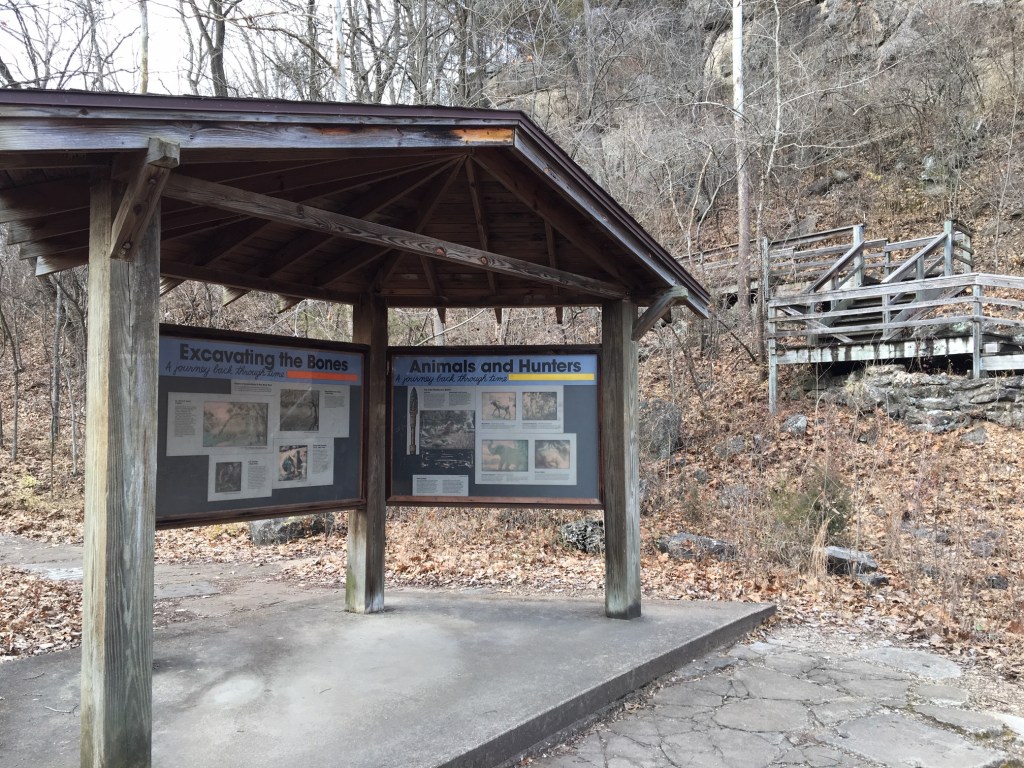
I always recommend Mastodon State Historic Site when people ask me what Jefferson County has to offer. The museum documents our area’s natural history with prehistoric evidence. The playground equipment and picnic area provide great day activities for a family. The three hiking trails range from easy and accessible to a challenging workout.

My other Jefferson County suggestion is the Sandy Creek Covered Bridge. While it doesn’t have an abundance of attractions, the uniqueness of its namesake structure is something you can put your hands (and feet) on to cross the creek the way area residents did more than a century ago. There are only four covered bridges remaining in Missouri.

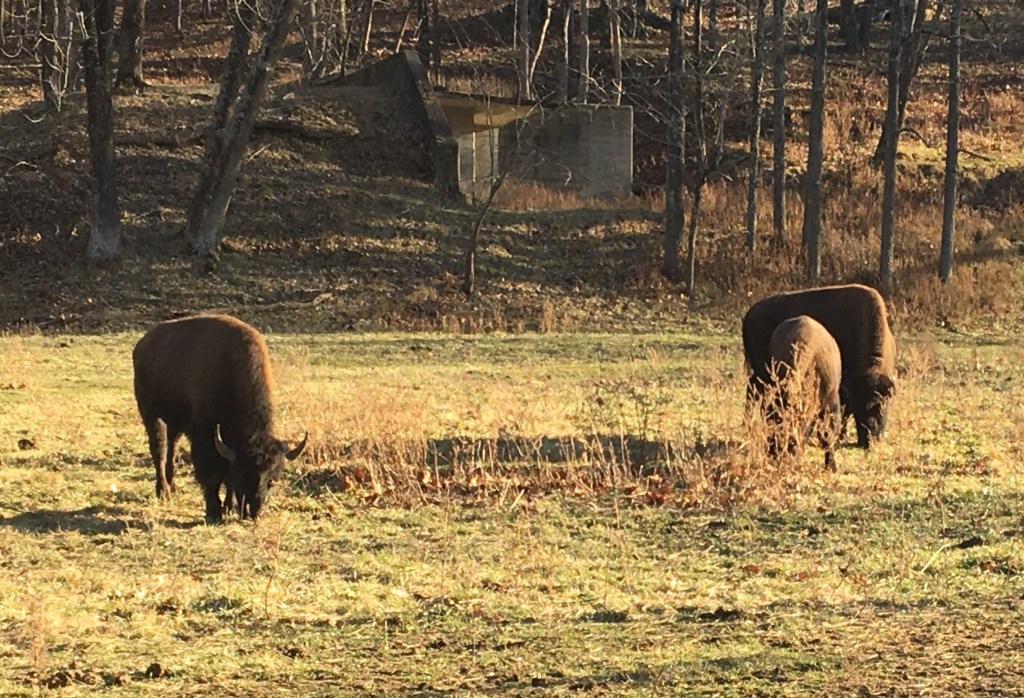
A herd of American bison roam freely at Lone Elk Park in St. Louis County for a unique drive-through experience.

St. Louis County has several locations for learning and exploring that are not as world-renown as the Arch and its expansion memorial. Combining locations is also a possibility. For example, Powder Valley Conservation Nature Center pairs well with Lone Elk County Park. One is an educational mecca, and the other is a drive-through, wildlife viewing opportunity. Grant’s Farm fits that bill too. A quick caveat: Lone Elk is better in the winter when you can see deeper into the woods.

One more St. Louis County location offers a cool immersive experience. The Sophia M. Sachs Butterfly House puts visitors among dozens of butterfly species and about 150 tropical plants. Admission is $8, but it’s free for members of the Missouri Botanical Garden. The Shaw Nature Reserve in Gray Summit is also a Botanical Garden property, and it provides options to see native plants in their natural settings.

The underground world of Meramec Caverns in Sullivan, Missouri, offers a 60-degree environment on even the hottest summer day.

Venturing further from the metropolitan area, Elephant Rocks State Park is more than a bunch of super-sized stones. It is natural history on display as a huge playground. Since you are already in the Arcadia/Ironton area, additional outdoor adventures can be found at Johnson’s Shut-Ins and Taum Sauk Mountain. Collectively the two state parks offer a unique chance to get your feet wet and view of the horizon from the highest peak in the state.

The highest spot in the state maybe be more than an hour from most of Jefferson County, and so is one of Missouri’s lowest. Meramec Caverns puts a whole different world on display with guided tours along lighted walkways. The year-round, 60-degree temperatures are certainly appealing on a hot summer afternoon.

I feel compelled to mention couple of other locations beyond the one-hour driving range. The Missouri State Capitol in Jefferson City puts history on display and can provide and a civics lesson or two. A visit to Central Dairy for ice cream is a worthy reward for a long car ride.

Last year we went to Watkins Woolen Mill State Historic Site near Independence, Missouri. It is not a day-trip by any measure, but if spending the night can be worked into the plan, a glimpse at the past about how fabric was made in the 19th Century is on display along with a historic house and farm.

John Winkelman has been writing about outdoors news and issues in Jefferson County for more than 30 years and was the Associate Editor for Outdoor Guide Magazine.

Scenic course experience exposes popularity of disc golf

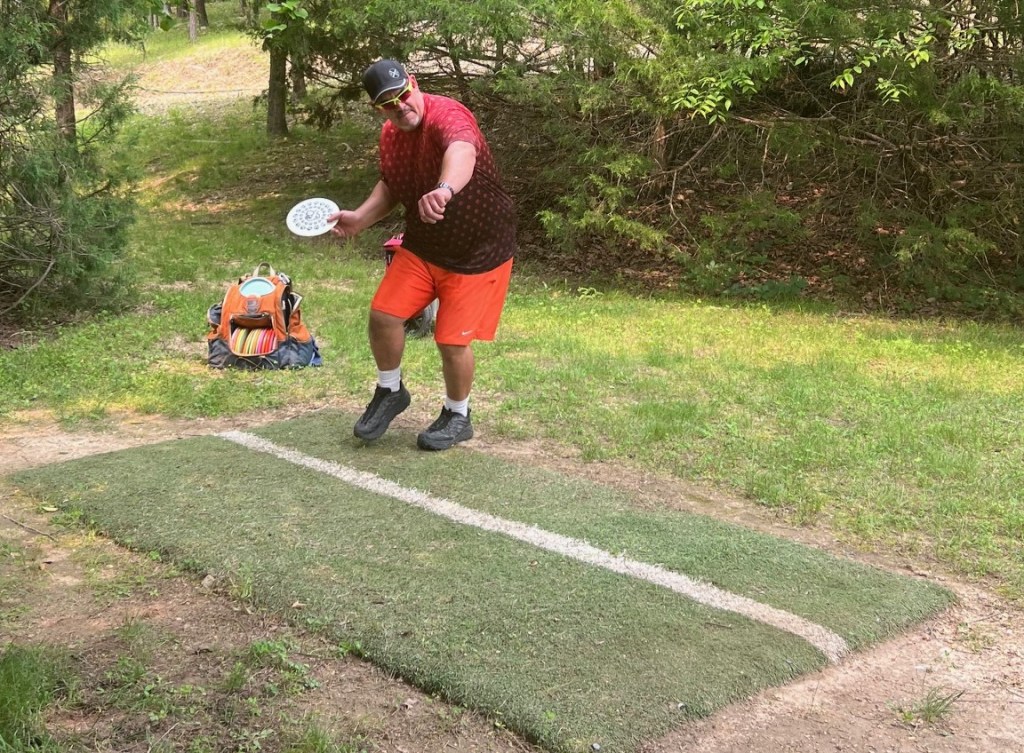
Disc Golf Monkey owner Russel Burns launches his drive from the No. 10 tee box at Hanna Hills Disc Golf Course in Laquey, Mo.

While it might not come to mind as a traditional outdoors sport, it would be difficult to play disc golf anywhere except outside. Jefferson County has several locations, so I have had many opportunities over the years to give the game a shot.

Many decades ago when I was in college, we played what we called Frisbee golf, picking locations around the quadrangle and throughout campus at Truman State to toss our discs toward. This past weekend I finally took the chance to join the legions of enthusiasts who recognize the game’s popularity.

Hanna Hills Disc Golf Course near Fort Leonard Wood in southwest Missouri is no place for a beginner. Fortunately, I made the loop with a couple of top-notch players, so I could pretend I fit in at the place that is rated among the 100 best courses in the world, in the top three in Missouri, and the state’s No. 1 most scenic course, according to udisc.com, the online authority for the sport.

After his retirement from the U.S. Army, Vic Bentele developed his property in Pulaski County to create a play space for his family and his soldier friends from nearby Fort Wood. He and his wife Diana cleared fairways through the woods and up and down the Ozarks hills.

With more than 300 feet of elevation change and spectacular views of the Roubidoux Creek valley, I did not have time to contemplate what happened to my college days’ disc skills. I just admired the scenery, along with the precision and distance displays put on by Vic and Diana’s son Michael Bentele, and disc golf equipment manufacturer Russ Burns.

Vic Bentele said the course does not charge players to try their luck at the course, but they do accept donations and require all players to complete a registration certificate before attempting their first toss across a small pond from the elevated No. 1 tee box.

The Jefferson County region offers more than a dozen disc golf courses. They are among 339 in the state, 10,644 in the United States, and 16,267 around the world, according to data from udisc.com. Across the state about half of the courses offer 18 holes or more, and the remainder are nine-hole courses.

Arnold, Festus and Hillsboro all have disc golf options in city parks. They are among the 89 percent of courses that are free to play. The 20 holes at Larry G. Crites Park in Festus include long open holes and wooded areas. The website says, it’s “not very beginner friendly.”

For the newbie in town, the nine-hole course at Jokerst Park in Festus gets a positive review from udisc.com. “Fun park-style course that is easy enough to bring a new person and still has enough to be fun for the seasoned player.”

The nine-hole course at Arnold City Park is rated as beginner friendly, and the same is said about the Hillsboro nine with the caveat that its “mostly shorter, but very technical holes feature wooded shots with terrain.”

The 18-hole course at Pacific Community Park opened in March 2024. Udisc.com says, “beautiful area with open and wooded holes with lots of shade. Great mix of regular and technical shots. Generally flat terrain.”

Other area courses in and around Jefferson County include the new 18-hole Knight’s Flight Disc Golf Club and Grace Way nine-hole course in DeSoto, an 18-hole course at Jefferson Barracks Park, Sunset Lakes former ball golf course in Fenton, and nine-hole courses at Kircker Park in Eureka and at Oakville Middle School, which is only open to the public when school is not in session.

Visit udisc.com/courses to find places to play near you.

John Winkelman has been writing about outdoors news and issues in Jefferson County for more than 30 years and was the Associate Editor for Outdoor Guide Magazine.

High school fishing teams open the sport to all students

The 2025 Seckman Jaguar Fishing Team included 40 anglers from grades fourth through 12th.

As most schools are putting the wraps on sports for the spring, students on area fishing teams are entering the best time of year for serious practice. Summer vacation offers many perks, and the long days of the season provide adequate opportunity for making as many casts as possible.

“Kids are so busy with activities these days, it’s hard for them to fit another activity in their schedules,” said Festus High School fishing team head coach Jay Beffa.

Organized practices are scheduled once a month, he said, but that doesn’t mean the anglers can’t find their way to some water to work on the tricks and techniques that could pay off for them in the tournament season.

The Festus team includes 62 boys and girls fishing in the high school and junior divisions. The teams include students in fourth through 12th grade. Coach Gary Hollern said his Seckman High School fishing team is up to 40 anglers for the upcoming season. Both programs started in 2021.

“The school recognizes us as a club sport, which means we get to use the school’s name and cafeteria for practices,” Hollern said. “The seeds were originally planted by Zach Hobbs and Sam Cox when they were in the 11th grade. Both of these young men are excellent anglers who helped to lay the ground work for the team to grow.”

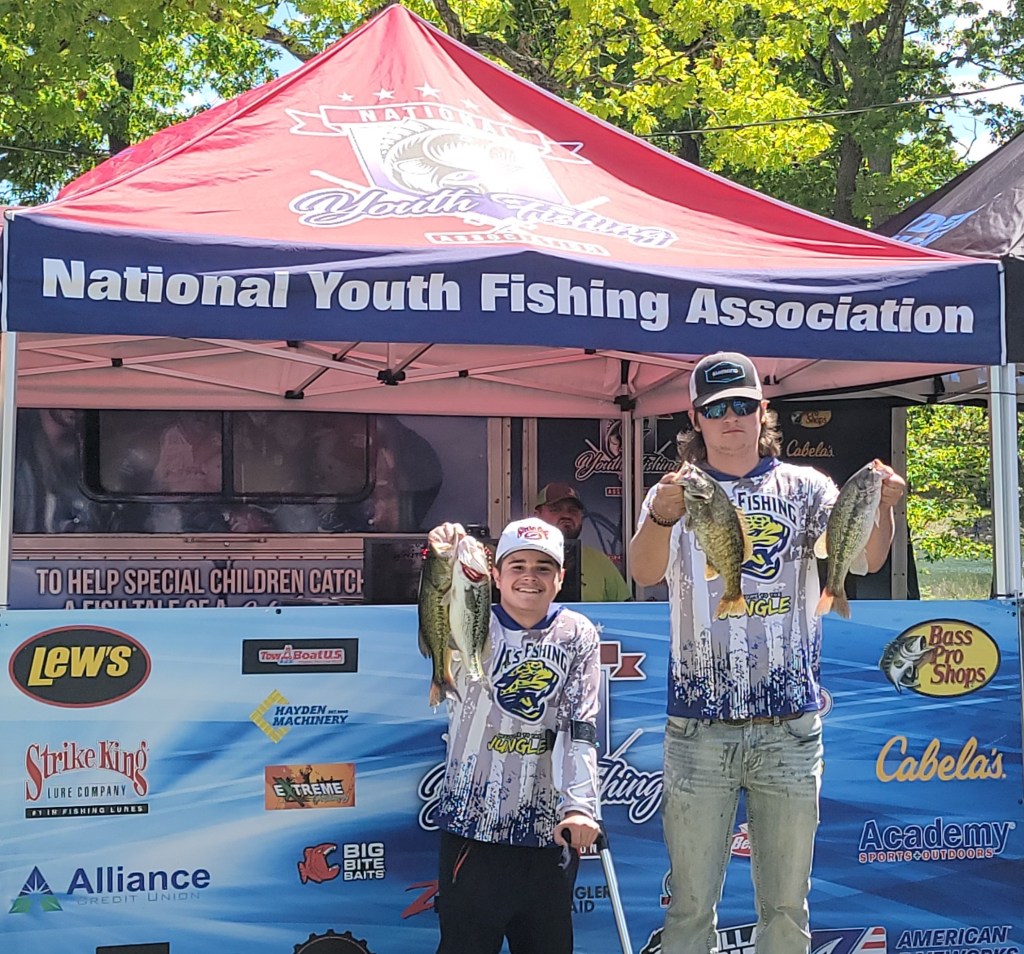
Two Seckman High School anglers show off their catch at a NYFA tournament weigh-in.

Both Seckman and Festus participate in the National Youth Fishing Association tournaments. The teams competed in qualifying events this spring at Bull Shoals, Lake of the Ozarks and Table Rock Lake. The state championship is June 7 at Stockton Lake, northwest of Springfield.

“This is a team tournament format consisting of two anglers, and a boat captain,” Hollern said. “The boat captain drives the boat and can coach the anglers but is not allowed to cast or fish in any manner. The goal is to weigh in the heaviest five bass.”

Finding boats and boat captains presents the biggest challenge for the teams, both coaches agreed. While many captains are family members, other area residents have made commitments to help kids get on the water for tournaments.

“This season we had two boats (not affiliated with the angler) that were able to be used to ensure we did not leave any kids on the dock,” Hollern said. “Boat captains give up their weekends to help get these anglers out into God’s great outdoors. We have had parents without boats, who see how much their kids are off the Xbox and enjoying the sport, go out an buy a boat.”

Members of the Festus High School Fishing Team volunteered at a recent veteran fishing event at the Elks Lodge Lake in Crystal City.

The fishing teams also rely on sponsors to help with funding and providing equipment.

“Being a 501(c)3 we been extremely fortunate to have several returning sponsors,” Beffa said. “We have several title sponsors that sponsor each individual tournament. We’ve been extremely blessed to be able to partner with area businesses to develop our own scholarship program above and beyond what the anglers could earn from competing in the tournaments.”

Because the programs are club teams, student anglers don’t have to be residents of the specific school districts to participate.

“If you have a young angler who is hooked on fishing. It does not matter what school they go to, you are invited to be on this team,” Hollern said. “The fish doesn’t know if the angler is young, old, boy, or girl. Anyone can win on any given day. It doesn’t matter how fast you can run or how strong you are. It’s not you against another person, it’s you against the fish.”

The Seckman coach also shared a favorite fishing quote of his from 20th century novelist John Buchan: “The charm of fishing is that it is the pursuit of what is elusive but attainable, a perpetual series of occasions for hope.”

Anyone hoping for more information about the Seckman team can call Hollern at 314-562-2001. To reach Coach Beffa call 573-963-6290.

John Winkelman has been writing about outdoors news and issues in Jefferson County for more than 30 years and was the Associate Editor for Outdoor Guide Magazine.
State plans permit price increases for third consecutive year

Just ahead of free fishing weekend, the state Department of Conservation is proposing increases in the cost of permits for the third year in a row. Based on the input it collected from hunters and residents in a survey this spring, the biggest boost will be on the backs of nonresident deer and turkey hunters.

The state Conservation Commission approved the proposed price increases at its May 16 meeting in Jefferson City. The changes require a public comment period, which will be available in July, and then final approval again by the commission in September before taking effect for 2026.

Deer hunters from outside of Missouri will see their permits increase by $72, and nonresident spring turkey hunters will pay $61 more. According to conservation department data, about 43,000 nonresidents hunt deer in Missouri and 10,000 purchase turkey hunting permits in the spring. About 400,000 residents hunt deer or turkeys each year.

While the proportion of nonresident hunters and anglers is low compared to residents, a department press release stated that the opinion survey and public feedback showed Missourians generally supported raising nonresident hunting permits to bring them more in line with surrounding states.

“Across deer, turkey, and waterfowl, one potential change supported by residents is adjusting permit prices to be more in alignment with surrounding states,” said conservation department director Jason Sumners.

If the proposal gets final approval, the price of nonresident firearms and archery deer hunting permits will increase from $288 to $360. The average price of nonresident permits in the states surrounding Missouri is $443.13 for firearms hunting and $456.88 for archery. Nonresident spring turkey hunting permits will rise from $243.50 to $304.50, compared to a surrounding state average of $255.22.

Resident permit prices are also going up with the proposed changes. Firearms and archery hunters will pay $1.50 more in 2026 than in 2025. Firearms deer and spring turkey hunting permits are changing from $18 to $19.50, and archery permits will be $22, up from $20.50.

Fishing permits are also increasing under the proposal. Residents will pay $14 instead of $13, and nonresidents will see a hike from $53.50 to $57 for annual fishing licenses.

(To see all proposed permit increases see the conservation department press release.)

The price adjustments are based on the Federal Bureau of Labor Statistics’ Consumer Price Index (CPI) related to cost-of-living increases from 2008 to 2024, the department press release stated. After nearly 20 years without an increase in permit costs, the state plans to recommend gradual price increases over 10 years at 50% of CPI growth for resident permits and an accelerated price increase for nonresident deer and turkey hunting permits to bring these permit prices more in alignment with other states.

The public comment period on the proposed permit price adjustments will be open from July 2 to July 31. For more information and to submit comments visit mdc.mo.gov/contact-engage/public-commenting-opportunities.

According to conservation department data, permit sales account for about 17 percent of the department’s budget. The Conservation Sales Tax provides about 62 percent, and federal taxes and reimbursements make up about 15 percent. Sales and rentals, interest, and other sources result in the remaining 6 percent. On average, Missouri residents pay $24 annually for conservation through the one-eighth of one cent sales tax.

John Winkelman has been writing about outdoors news and issues in Jefferson County for more than 30 years and was the Associate Editor for Outdoor Guide Magazine.
County records 17 new positive CWD tests in 2024-25 season

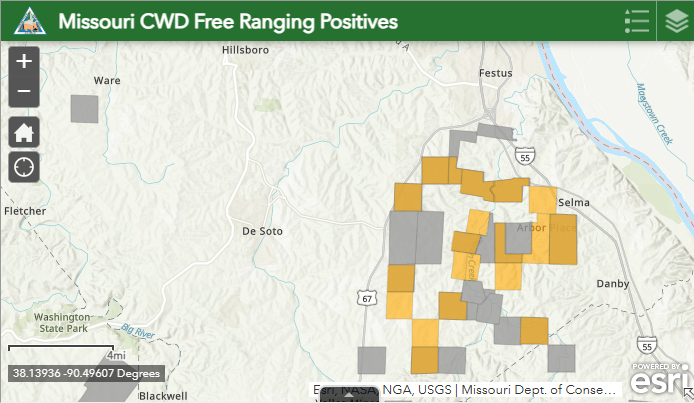
An online map shows the proximity of all positive tests for chronic wasting disease in Jefferson County. The gray boxes represent cases from previous years, the colored boxes are from 2024-25.

Jefferson County and its neighbors continue to rack up substantial increases in cases of chronic wasting disease discovered in deer harvested by hunters. After increasing its total by more that 50% last year, Jefferson recorded an increased number of cases again this year, according to an annual report issued by the state Department of Conservation.

The 17 new positive tests from the 2024-25 season in Jefferson County tops the 2023-24 total of 15, and moves the county’s overall total to 60 since the first case was discovered near the Meert Tree Farm south of Festus in 2016. Fifty-nine of those confirmed positive tests have been from property within a five-mile radius of the original site.

Since 2016, hunters throughout Jefferson County have been required to get the deer they kill on opening weekend tested for CWD. Only one positive test has been found beyond the triangle formed by Interstate 55, Highway 67 and the Ste. Genevieve County line. Hundreds of deer have been tested from outside of that concentrated area, and the only outlier is a positive test from near Ware in west central Jefferson County in 2023.

While the disease does not appear to have spread its tentacles across the county, it continues to rapidly expand its range statewide. Seven counties had their first cases discovered this year including some heavy hitters in annual harvest totals. Texas County in south central Missouri is routinely in the top 10, and Callaway County between St. Louis and Columbia posts big numbers for archery and firearms harvests.

The state reported 243 new positive tests for chronic wasting disease in the 2024-25 hunting season.

In 2011 CWD was discovered in wild deer in Macon County, Missouri, near its border with Linn County. Those two counties combine for 156 of the 815 positive cases statewide. With 34 new positives this year, Ste. Geneveive County has the highest individual county total in the state with 136 cases. Franklin County added 24 new cases this year to reach 99 since the disease was first discovered there in 2015.

The annual information release reported 243 positive tests gleaned from more than 36,000 samples taken from 276,000 deer killed in fall firearms and archery seasons, and from post-season targeted removal on properties where the disease has been found in the past. Seventy of the positive tests were from 4,768 deer harvested statewide in post-season effort.

“The goal of targeted removal is to remove CWD-positive deer and reduce deer density in these localized areas to slow the spread of CWD and protect Missouri’s deer herd,” said Deb Hudman, state wildlife health program supervisor. “Targeted removal is a proven method to slow the spread of CWD, and Missouri is one of several states that uses it to manage the disease.”

A positive test rate of less than one percent is good news and a sign that the program to limit the spread is working.

Texas, Callaway, Marion, Miller and Morgan counties, which found their first positive test results in 2024-25 will be included in CWD-management zones when the Conservation Commission meets this month to establish regulations for the upcoming fall seasons. Because of the location of the positive test in Marion County, Ralls County is likely to be added for management zone regulations as well.

Hunters in those counties should expect to be required to get any deer they kill during opening weekend tested for the disease, and hunters will be permitted to hunt through the extended CWD season, which follows the November portion through Thanksgiving weekend. Providing grain, salt, minerals or other consumables for deer will be prohibited year-round in those areas.

Full details on the fall hunting season will be released in July with the publication of the annual Fall Deer and Turkey Huntoing Regulations booklet. To see full information on chronic wasting disease in Missouri visit www.mdc.mo.gov/cwd.

John Winkelman has been writing about outdoors news and issues in Jefferson County for more than 30 years and was the Associate Editor for Outdoor Guide Magazine.

County schools dominate state archery tournament

Students from George Guffey Elementary School brought home another first place trophy from the state tournament.
Photos Courtesy Missouri Conservation Heritage Foundation.

The podium was a popular place for Jefferson County archers at the National Archery in Schools Program state tournament on March 19 through 22 in Branson, Missouri. Twenty-three area schools participated in the bullseye tournament and proved the point that these kids are good.

Wade Conner, a sophomore at Hillsboro High School, shot a score of 296 out of 300 and took individual first place honors in the bullseye competition, and with his teammates posted the highest team score among the 51 high school teams.

Once again, George Guffey Elementary was the best among fourth and fifth grade students, and they were joined by top performances from other Fox C-6 District schools Lonedell, second place, Simpson, third place, and Meramec Heights seventh place. Windsor Intermediate Center finished in ninth place out of 22 elementary schools.

The Fox District also had the top performers in the middle school category for sixth through eighth grades. Ridgewood placed first, and Seckman finished fourth. Hillsboro Junior High recorded the fifth best score of 64 schools in the division.

Students who finished in the top 100 for their classes at Guffey include Allison Sullivan, 273, Zeralyn Smith, 270, Briella McCabe, 267, Tathoi Das, 267, Aylin Madzhitova, 265, Charlie Bullington, 264, Nora Burger, 263, Lena Cook, 263, Mani Jackson, 261, Jaxson Nanney, 260, Remy Bailey, 258, Julia Kovack, 253, Madeline Hazer, 252, Beckett Downey, 251, Mason Georger, 249, Oliver Rongey, 246, Lincoln Hoffman, 243, Ariel Garrison, 243, Kellie Zoellner, 234, Julianna Throop, 226, and Myles Dugan, 222.

Jack Ferrario paced his Lonedell Elementary team with a score of 279 out of 300.

Top 100 shooters at Lonedell were Jack Ferrario, 279, Stanley DeFrate, 262, Ian Iverson, 256, Lincoln Greiner, 253, Tristan Harralston, 252, Paulina Pullen, 251, Sophia Smith, 246, Rilynne DeLarber, 246, Bree McDonald, 245, Malcolm Harris, 245, Luke Duffe, 242, Sylvia Baechle, 234, Lillianna Littrell, 230, Conner Lanfer, 226, Lila Salazar, 204, and Alice Forbes, 188.

Simpson high scorers were Kynslee Beutel, 272, Joslyn Burgess, 264, Ariana Giljum, 263, Tessa Burgess, 260, Erik Whelan Bourne, 255, Angelina Smick, 249, David Parrish, 246, Edah Jusic, 241, Majda Aliji, 239, Maryam Aliji, 231, James Rose, 212, and Emma Schaefer, 209.

The best at Meramec Heights were Carter Kennon, 261, Jackson Olds, 259, Jaxon Arnold, 253, Bobby Renfro, 250, Maddie Hill, 248, Paisley Williams, 246, Kaitlyn Steinman, 246, Gabriella Romano, 234, Lanie Matthews, 231, Joe Gabler, 210, and BreLea Rees, 207.

Windsor Intermediate shooters scores included Rosie Hartman, 248, Lorelei Slate, 247, Addy McNabb, 246, Grace Kezirian, 245, Blaynee Buenniger, 243, Mia Stockwell, 231, Elizabeth Erb, 229, Colt Hodges, 229, Jaxon Bollinger, 221, TJ Sinclair, 215, and Caleb Welch, 207.

Seckman Elementary top shooters were Emily Buss, 263, Blake Slivkov, 255, and Daniel Barnby, 248, and Athena Elementary was led by Kolton Conner, 249.

Ridgewood shooters in the top 100 for their classes were Judah Martinez, 284, Elise Watkins, 284, Jasmine Collier, 280, Leo Pagan, 279, Armin Mujic, 278, Tripp Reinken, 277, Olivia Joggerst, 274, Bailey Eskew, 272, Truman Moore, 271, Logan Bloodworth, 270, Kaylee Storey, 270, Sydney Wolff, 268, Austin Kennon, 266, Gracie Jo Watkins, 262, Madeline Lenau, 261, and Logan Stevens, 255.

Seckman Middle top scorers were Danielle Crinnion, 285, Ethan Miles, 285, Luke Giger, 278, Lena Anderson, 276, Caden Schulte, 274, Paige Steinhoff, 270, Zoey Hatley, 269, Austin Bell, 269, Ethan McGee, 268, Ryleigh Peppers, 267, Elliette Howard, 267, Caroline Belcher, 266, Zoey Suntrup, 263, and Ella Anderson, 252.

The best at Hillsboro Junior High were Ava Luttrell, 284, Alaina Priscu, 281, Tommy Kuczynski, 281, Paxton Schnable, 277, Addy Goforth, 273, Jacki Kohler, 273, Bentley Beavers, 272, Kylee Olson, 271, Gavin Bishop, 270, Zayne Nichols, 264, Morgan Crosby, 262, and Talia Gross, 262.

Windsor Middle had seven shooters in the top 100 for their classes including Shelby Hodges, 274, Ty Riggs, 265, Alexa Zehr, 263, Jennalee Dews, 263, Shelby Schenk, 262, August Prehm, 257, and Haley Hayes, 255.

Jefferson Middle’s Macartney Grider shot a 260 for 49th place of 210 sixth grade girls.

Hillsboro High School archers finished in first place at the state tournament.

The first place team from Hillsboro High School was led by Wade Conner, 296, James Kimbrell-Cave, 293, Austin Morgan, 289, Gavin Formann, 286, Olivia Heine, 286, Trenton Weber, 285, Briley Vontalge, 285, Adelynn Jaeschke, 284, Colton Olson, 282, Natalie Jeaschke, 281, Kaleb Greiwe, 281, Bryce Ludwig, 280, Samuel Pierce, 279, Jackson Betzold, 278, Thomas Kuczynski, 278, Avery Oshia, 275, Gavin Gross, 274, Rylan Luttrell, 274, Lucas Burle, 273, Christian Ahlheim, 273, Cole Huskey, 272, Reece Churchill, 267, and Jaxi Vontalge, 261.

Seckman High finished in 13th place among 51 high schools thanks to scores from Abbi Hartigan, 290, Alexa Formby, 284, Landon Marlett, 280, Cassidy Jablonski, 279, Ian Slaven, 277, Jackson Phillips, 276, Brayden Woolsey, 274, Collin Davis, 273, Maddie McConochie, 272, Jacob Boden, 272, Cameron Crinnon, 267, Logan Wampler, 267, Josie Lenzen, 264, Sara Balding, 263, Madeline White, 259, Sara Kitson, 257, Kaitlyn Richardson, 255, and Taylor Gallagher, 254.

Windsor High School top archers were Will Deters, 285, Joseph Stephens, 284, Owen Saeger, 278, Noah Poirrier, 276, Andrew Renner, 275, A’nyah Hutchinson, 270, Dakota Dedert, 269, Ella Schaumann, 269, Nick Guebert, 268, Ella Cate, 267, and Billy Belosi, 261.

Fox’s top shooters were Mason Cook, 280, Tanner Klotz, 279, Semir Mujic, 271, Braelyn Haynes, 261, Myra Burger, 259. The best from Festus were Natalie Yates, 290, Kylie Tucker, 276, and Olivia Lucas, 274.

Grandview was led by Ellie Kutrip, 283, Ethan McKinney, 271, John Roberts, 265, and Samantha Corio, 263. Top scoring Jefferson High archers were Carleigh Cook, 271, Ethan Vandiver, 270, Brooklynn Rapp, 268, Ben Vandiver, 268, Cameron Wideman, 267, and Olivia Kentch, 262. The best from De Soto High were Bailee Sickmeier, 268, and Jayda Kirkpatrick.

John Winkelman has been writing about outdoors news and issues in Jefferson County for more than 30 years and was the Associate Editor for Outdoor Guide Magazine.
Annual buyback program incentivizes invasive pear tree removal

The city of Herculaneum and a few other online sources have recently posted helpful tips for pruning Bradford pear trees. The once-revered ornamental landscaping plants are now recognized as invasive, and they have a particular trait of breaking branches easily in wind and ice storms.

Recent spring storms may have brought the need for tree trimming to light. The suggested solution requires a chainsaw and the requisite safety precautions, but beyond that, the procedure is simple. One cut across the stump as close to the ground as possible is recommended to eliminate future troubles.

A bonus currently available provides Missouri residents a free replacement tree on Earth Day for removing a Bradford pear. The annual Callery Pear Buyback Program from the Missouri Invasive Plant Council returns thanks to co-sponsors including the state Department of Conservation, Forest ReLeaf of Missouri, and the Forrest Keeling Nursery.

This Missouri Department of Conservation photo shows residents picking up their replacement trees.

I was able to participate for the first time this year with the April 22 pickup date matching my schedule, and the discovery of a rogue pear tree in in my woods last summer. I marked the menace and returned this spring to make the fatal cut.

State residents who remove a Callery pear tree from their property can receive a free native tree from one of more than dozen locations. Participants must register before April 17 and provide a photo of the tree they eliminated. For more information and registration, visit moinvasives.org.

The expanded list of pickup locations includes Park Hills this year, where I will be getting my new green hawthorn. The 3-gallon nursery stock won’t immediately stack up to the 20-foot tree it replaced, but it will be the right size and time of year for replanting.

As the old proverb proclaims, “The best time to plant a tree was 20 years ago. The second best time is now.” Anytime in April is actually very good. It’s the reason the month hosts Arbor Day and Earth Day.

I certainly won’t miss the wild-in-the-woods tree I’m trading in, so I know it would be much more difficult for those who have big flowering beauties in their yards. But the trouble they cause can not be understated.

Bradford pear trees and their relatives proliferate rapidly through seed dispersal and vegetative means. They quickly form dense thickets and choke out native trees and plants, according to the conservation department. Because they produce their buds and leaves earlier than other plants each spring their growth shades out opportunities for wildflowers and other species.

Among the replacement trees suggested by the department are American plum, flowering dogwood, eastern redbud, hawthorn and service berry, which are all spring bloomers and native species.

The hawthorn and dogwood were listed as available at Park Hills when I registered for my tree, but now are both marked sold out. Other options at the St. Francois County location include black gum, cherry bark oak, elderberry and white oak trees.

The buyback program began in St. Louis and Columbia in 2019 and has expanded to include 17 locations this year. In 2024, 630 donated trees were distributed around the state in return for the elimination of Callery pear trees.

There is no argument that the abundant white flowers are pretty, and as a sign of spring they give hope to a near future of warmer weather, but the beauty is truly in the eye of the beholder. They are stinky, their falling fruit stains sidewalks, and as mentioned earlier, they do not hold up well against the weather.

With its clusters of strap-shaped, bright white petals, the early blooming, native serviceberry flower is much prettier than a Bradford pear tree.

And there are much better options. On a recent hike south of Festus, I spotted a few serviceberry trees with clusters of bright white flowers. The puffy balls of white stood out in the gray wood landscape. As a native species they were much more appealing than the annual roadside clutter of the rogue Bradford pears.

John Winkelman has been writing about outdoors news and issues in Jefferson County for more than 30 years and was the Associate Editor for Outdoor Guide Magazine.

State surveys hunters on possible non-resident restrictions

To participate in the survey go to mdc.mo.gov/MDChuntersurvey. The deadline to complete the survey is March 24.

One of the most contentious but least consequential issues that hunters argue about involves non-residents who come to our state to hunt for deer, turkey and waterfowl. The state Department of Conservation is asking hunters and the public for their opinions about the subject.

An email was sent to 56,000 state residents and 1,800 non-residents who purchased permits over the past two years, according to a press release from the conservation department. Those survey recipients were selected from a pool of 542,532 permits buyers, so about 10 percent of permit buyers should find a link in their inboxes.

The email was sent on March 10, said Joe Jerek, news services coordinator for the department. Others who want to weigh-in on the issue are welcome to complete an online survey that asks them to consider how strongly they agree or disagree with proposals affecting out-of-state hunters.

The data is collected anonymously, identifying participants only by their zip code. To participate in the survey go to mdc.mo.gov/MDChuntersurvey. The deadline to complete the survey is March 24.

I was not among the lucky ones to receive the survey email, but I did complete the questionnaire using the provided link. Introductory queries asked about hunting interest and experience, but then it got down to the nitty gritty.

The state is considering regulations targeting non-resident hunters. Respondents were asked their preferences on ideas like limiting the days or portions of the deer, turkey, and waterfowl seasons that non-residents would be allowed to hunt, changing the price of non-resident hunting permits, and/or limiting access to public lands for non-residents.

In addition to the multiple choice questions, the survey allowed fill-in-the-blank comments. I felt most comfortable commenting about deer hunting because that is the sport I am most familiar with, but overall my opinion is that we should find ways to encourage hunting in Missouri rather than creating additional restrictions.

Taking on the topics individually, and again, speaking mostly about deer hunting, I don’t see how any of the ideas are beneficial. It wouldn’t make sense to restrict any portion other than opening weekend, and that’s when I expect that most non-resident hunters are former Missourians who have moved away or family members who come from out of state to carry on traditions.

The survey question about the costs of non-resident permits asked if the price to play should match the rates charged by surrounding states. Iowa, Illinois and the others typically charge us more to go there than we ask for reciprocal privileges. It makes sense to have higher prices for non-resident permits, because they don’t pay the sales tax we do all year, but to use pricing as a weapon to limit access is not very neighborly.

While it may be more significant for waterfowl hunters to be restricted from state-owned conservation areas and other properties, it does not seem like limiting public-land deer hunting could possibly impact harvest totals or opportunities for residents.

Out-of-staters are not killing all the game or even a significant proportion. Their number of participants is fractional compared to resident hunters. Yes, there are many “professional” hunters who come in and leave with trophies, but they also leave a lot of their money behind. The state highlights the economic impact of hunting, especially in rural areas, and it is an added bonus that some of the money comes from beyond our borders.

It’s OK to sit around the campfire or on a barstool to discuss department rules you don’t like, but if you want to add your opinion where it matters, you have a few more days on this topic.

John Winkelman has been writing about outdoors news and issues in Jefferson County for more than 30 years and was the Associate Editor for Outdoor Guide Magazine.
Annual antler measurement event Saturday at Henges Range

The annual scoring event at Jay Henges Shooting Range and Education Center this Saturday will have several stations for hunters to have deer antlers measured.

Most of the chatter following last year’s firearms deer hunting season was about the reduced harvest totals. Rationale such as weather, acorns, moon phases and timing didn’t appease the skeptics, but when reviewed over time, things certainly were not that bad.

The overall harvest total was down 15% from the record set the previous year and 8% below the most recent five-year average, but there were still 276,272 deer taken by hunters. Of those checked from all seasons combined, 129,252 were antlered bucks.

Which brings me to promotion of this weekend’s annual free antler scoring event at Jay Henges Shooting Range and Education Center near High Ridge. The open house is scheduled from 9 a.m. to noon on Saturday, March 15. Shed antlers and racks from previous years may also be scored.

The event is free, but hunters may choose to have their trophies recognized by Pope and Young, Boone and Crocket, and Missouri Show-Me Big Bucks Club record books for a fee. The Boone and Crocket registry includes deer taken with firearms, while Pope and Young provides the same kind of certification for bow and arrow hunters. Show-Me Big Bucks Club recognizes trophy white-tailed deer harvested or found in Missouri, in typical and non-typical categories.

Advanced registration is not required for the open house event. The Henges Range is at 1100 Antire Road, near its Interstate 44 intersection. For more information call 636-938-9548.

The overall harvest total may have been down this past season, but archery hunting numbers statewide were about 1% higher than last year. Jefferson County held onto its position as the archery champion, exceeding its own record-setting total of 1,445 deer by nearly 10%. Top counties for the 2024-25 season were Jefferson with 1,579, Franklin with 1,216, and St. Louis with 994.

John Winkelman has been writing about outdoors news and issues in Jefferson County for more than 30 years and was the Associate Editor for Outdoor Guide Magazine.

Montauk recovers in time for trout season opening day

Cold weather will not curb the crowds at Meramac Springs or any of the trout parks during opening weekend.

When opening day of trout fishing season comes this weekend there will be plenty of reasons for celebration at Montauk State Park and big crowds of people at all four of the state’s trout fishing parks.

Montauk was devastated by historic flooding in November and remained closed throughout the winter catch-and-release season, but contractors, state staff and volunteers worked throughout the past three months to assure the facility would be ready by opening day.

March 1 carries holiday status for many people who live and love the sport of cold water fishing. When the opener matches up with the weekend on the calendar, the crowds reach their peak in the four places in Missouri where the slender salmonidae are readily available.

“Missouri State Parks team members and volunteers have been working hard to get the park opened and cleaned up, but there ias work to do,” said Justin Adams, Ozarks regional director, for Missouri State Parks.

While Montauk will be open, some of the campsites will not have full-service electricity available. Other areas are still affected with layers of sand throughout the park, covering some grass and woodland areas.

Park staff will be reseeding areas of the campground and other day-use areas in an effort to reestablish grass, and efforts continue to get electrical service restored. Generator use is not permitted during quiet hours in the campground.

In addition to the efforts of the park’s paid personnel, more than 70 volunteers visited on Feb. 1 to lend a hand to the cleanup, said Laura Hendrickson, Missouri State Parks Director.

“Well over half of the volunteers drove more than two hours to help,” she said. “Some of them had never even been to the park before Saturday. It turned out to be a great day.”

Montauk is near Salem, Missouri, and will be ready for fishing on March 1. The same situation awaits anglers at Maramec Springs near St. James, Bennett Springs near Lebanon, and Roaring River in the southwest corner of the state. The Department of Conservation operates trout hatcheries at all of the parks and will stock fish based on the anticipated crowds each day.

With a Saturday start, crowds are usually significantly larger than when March 1 arrives mid-week. As many as 10,000 anglers could try their luck in the four parks this weekend if the weather forecast is favorable.

The state stocks fish in the trout parks daily until Oct. 31. More than 600,000 trout will be released at the four trout parks throughout the during the catch-and-keep season. Most of the fish will be rainbow trout that are 10 to 12 inches long, but larger fish and some brown trout are also included in the stocking plans.

“Despite production challenges due to historic flooding experienced last year, we expect to have a successful trout season with ample fishing opportunities for anglers,” said state Department of Conservation hatcheries manager Clint Hale.

Trout anglers are required to purchase a daily trout tag to fish in the state’s trout parks. The cost of a daily trout tag is $5 for adults and $3 for those 15-years-old and younger. Daily tags can only be purchased at the four trout parks. Resident anglers ages 16-64 and nonresidents 16 and older also need a statewide fishing permit in addition to the daily trout tag.

The daily limit for trout in the parks is four, and each location has restrictions for the types of bait or lures that can be used in certain segments of the streams.

John Winkelman has been writing about outdoors news and issues in Jefferson County for more than 30 years and was the Associate Editor for Outdoor Guide Magazine.