Every spring the state Department of Conservation sends a reminder to “leave wildlife wild” because the advice is so important for the newborns and hatchlings that sometimes end up a little too close to home.
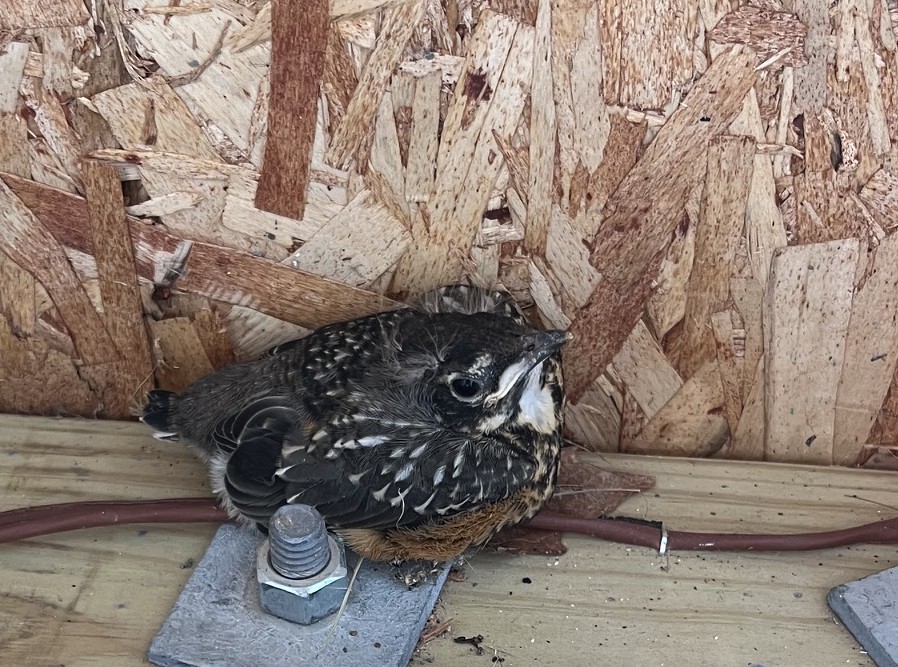
I had two encounters last week. A baby robin found its way into the garage, then couldn’t find its way out. It huddled in a corner, inches from the 16-foot-wide open door, afraid to move as I approached. With a five-gallon bucket lid as a safe landing zone, I convinced it to take the leap and then quickly carried it through the opening.
The flightless fledgling hopped across the lawn as one of his parents squawked overhead. I was not sure who was being scolded, me or the baby bird. The adult swooped down and gave the bird a bite to eat and then flew back to the neighbor’s roof.
The next time I went out to the garage, the little hopper had worked its way back inside. There is no way the concrete floor was more comfortable than the green grass, and for some reason, this time the bird was all the way at the back of the garage. With gentle nudging from a floor broom, I was able to direct it out again and close the door.
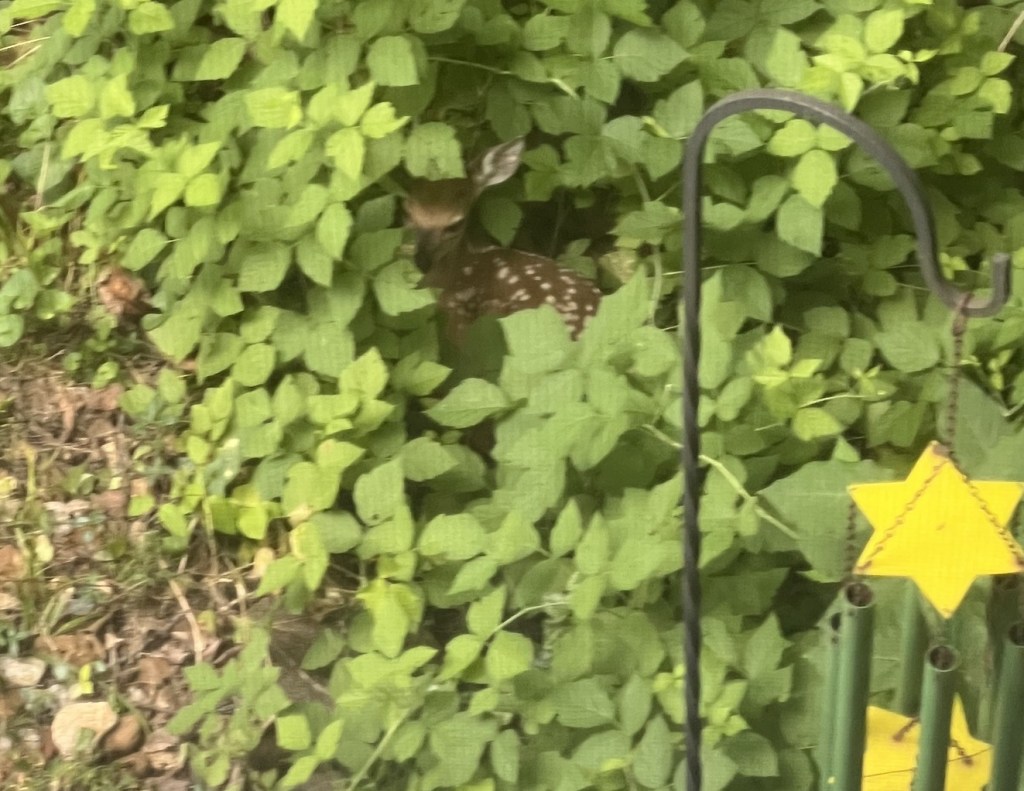
Then this past weekend, I peeked out the bedroom window early on Saturday morning to see a fawn curled up in the vines at the edge of the backyard. Throughout the day and into the evening we checked on the baby deer. Although it stood up and laid back down, it never left its green hiding spot.
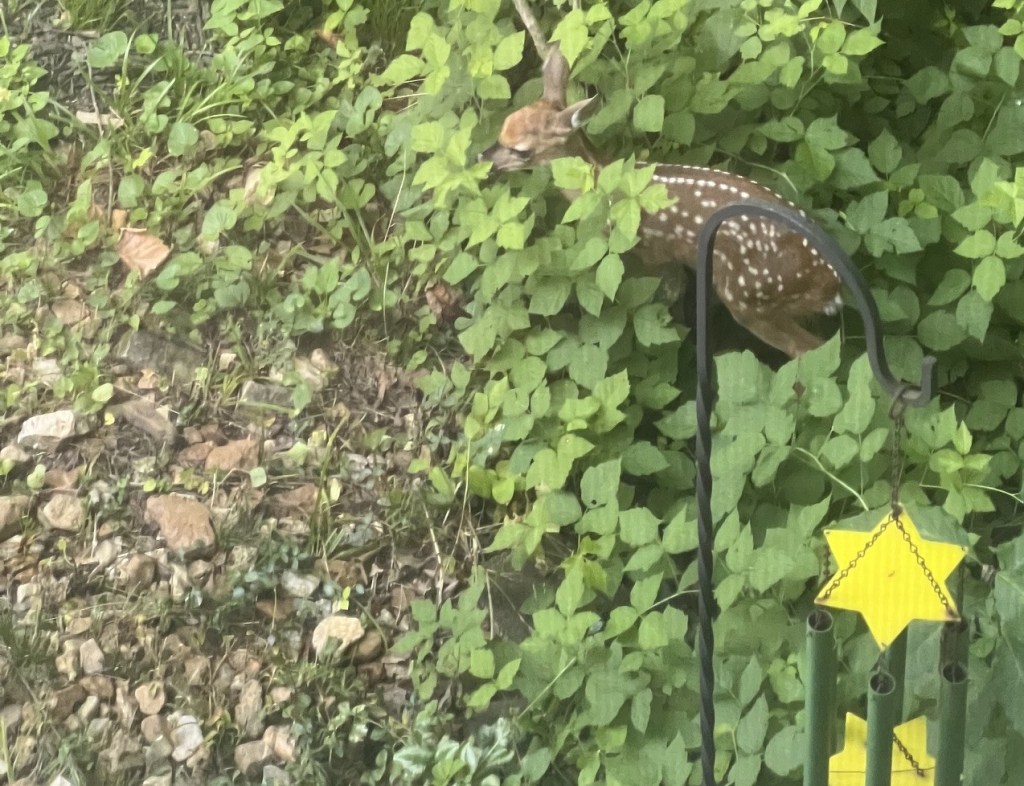
I scanned the nearby woods several times and never saw its mother, but I am certain she was out there somewhere. The next morning the fawn was gone. Hopefully we will see it again as it grows.
“Young animals are rarely orphaned,” conservation department wildlife veterinarian Sherri Russell said in a press release. “If the young are left alone, the parent will usually return. Parents are normally out searching for food and cannot constantly attend to their offspring.”
Her description of the baby bird I saw was precisely what I witnessed. It tried to fly but had not mastered the skill.
“If you see a chick on the ground hopping around and it has feathers, leave it alone, the parents are nearby keeping an eye on it,” Russell said. “Fledglings can spend up to 10 days hopping on the ground while learning to fly.”
Nests of baby rabbits face dangers from pets and mowers this time of year, but the greatest peril may be well-meaning people trying to take nature into their own hands.
“Rabbits seldom survive in captivity and can actually die of fright from being handled,” Russell said. “Even if the animal is injured, return it to the nest because the mother will most likely return.”
Despite what many think, wild mothers do not abandon their young because of a human scent, she said.
“While people have good intentions, the care and rehabilitation of wild animals require special training, knowledge, facilities — and permits,” Russell said. “Without such care, wild animals will remain in poor health and could eventually die. And it is illegal to possess many wild animals without a valid state or federal permit.”
Russell also noted that wildlife can become dangerous as they mature, and can carry parasites, disease, and can damage property.
“Native wildlife can carry mites, ticks, lice, fleas, flukes, roundworms, tapeworms, rabies, distemper, tuberculosis, respiratory diseases, and skin diseases,” Russell said. “Some of these can be transmitted to humans.”
Nature can be a cruel place, and occasionally a baby will lose its mother or fall from a tree before it is ready to leave the nest, but no matter how well-meaning we may be, people do not make good surrogate parents.
John Winkelman has been writing about outdoors news and issues in Jefferson County for more than 30 years and was the Associate Editor for Outdoor Guide Magazine.

