The Missouri Invasive Plant Council has sent a Save The Date reminder for the annual Bradford Pear Buyback Event on April 21, but the more important calendar consideration is March 16, which is opening day for registration to participate.
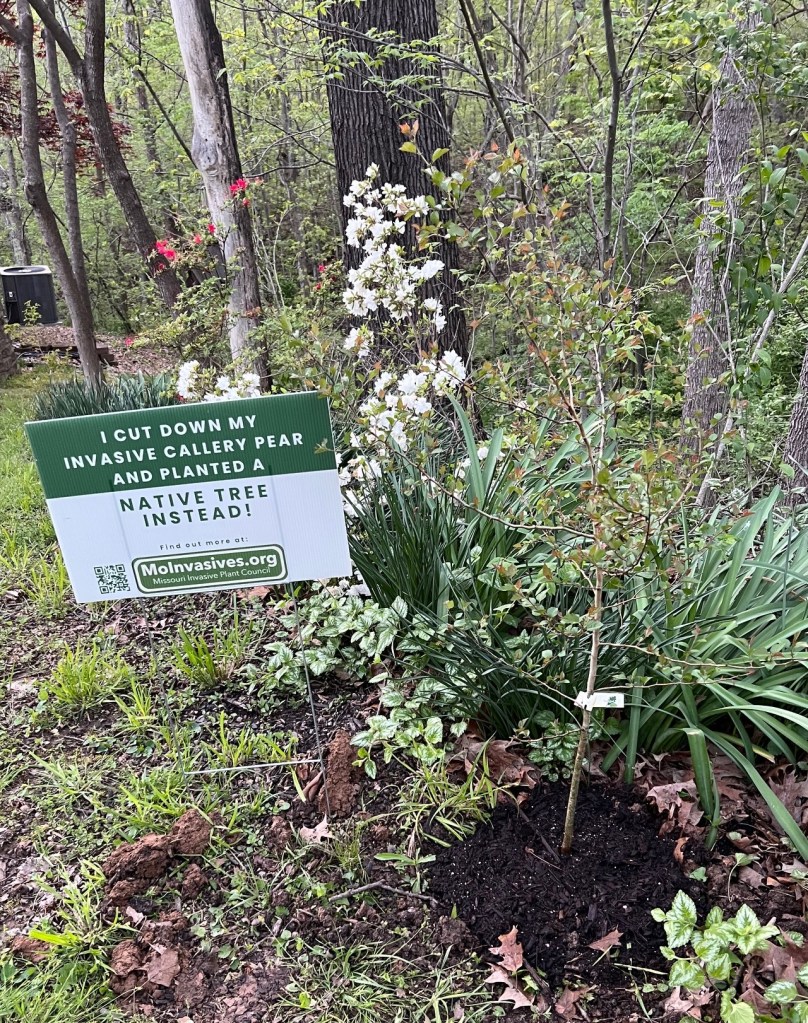
Homeowners who are willing to remove the invasive Callery pear trees growing in their landscapes can trade up to a native species through the program. I made the swap last spring, and I’m very happy with my little Green Hawthorn. At the pick-up place in Park Hills, I met a family from Herculaneum who had received new trees two years in a row.
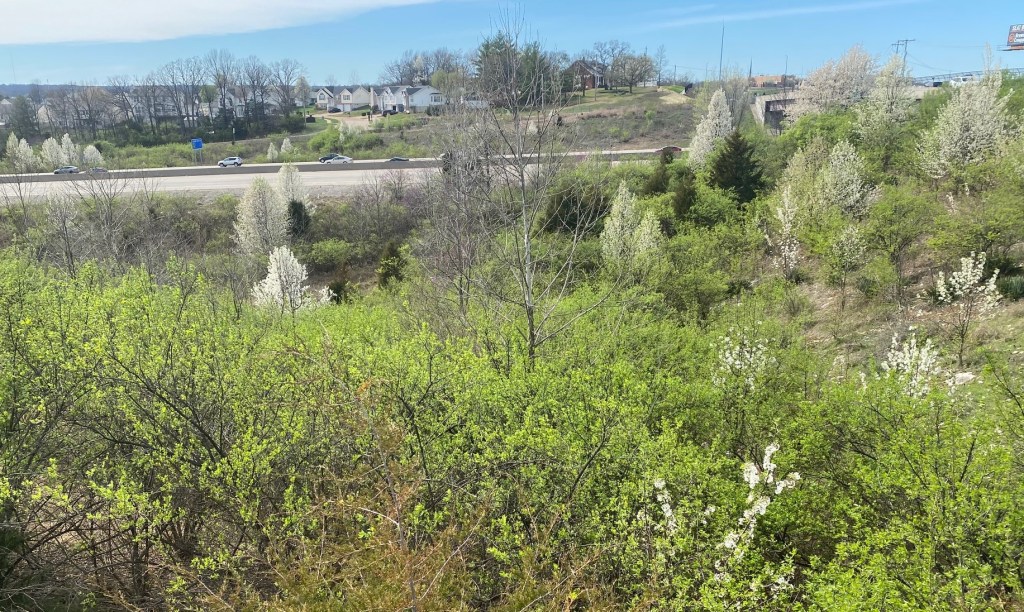
We will soon be seeing the scourge that the proliferating pears have become. Hillsides along the highways and roadside ditches throughout our towns will be filled with the bright white blooms that homeowners once believed would only be fast-growing, front yard shade trees.
In addition to their fragile limbs that often break in spring storms and the smelly fruits that stain everything they fall on, the trees have hybridized into a wild menace. They are rapidly out-competing and crowding native species in spaces where we would expect to see more Flowering Dogwoods and the pale purple blooms of the Eastern Redbud trees.
Registration for the “buyback” event opened March 16 and closes April 16. Residents must submit a photo of themselves and their felled pear tree to be eligible to receive a free native replacement. The program continues to grow with 23 locations statewide, including St. Louis and Park Hills in the Jefferson County region.
When registering for a pick-up location, participants select the type of tree they will receive in the exchange. The trees are provided by nurseries and are limited in supply, so the earlier in the registration period trees are cut and submitted, the better the available selection.
The six varieties provided in Park Hills this year include Black Chokecherry, Black Gum, Cherrybark Oak, Red Maple, Riverbirch and Silky Dogwood. At the St. Louis location, 10 trees are available including Black Gum, Carolina Buckthorn, Deciduous Holly, Eastern Redbud, Hackberry, Kentucky Coffee Tree, Northern Red Oak, Pawpaw, Red Maple, and Swamp Oak.
The state Department of Conservation website offers a terrific field guide to review details about which tree may be best for the circumstances in their yard. The Silky Dogwood for example is more of a shrub than its more familiar Flowering Dogwood cousin, topping out between three and 13 feet, compared to the 40-foot possibility for the official state tree.
The Eastern Redbud is a hearty native that thrives in open woodlands and tree lined edges where it grows well in the partial shade of other bigger trees. Like the Flowering Dogwood it can grow up to 40 feet tall and 35 feet wide. It also puts on a great springtime show as its flowers fill its limbs before the bright green, heart-shaped leaves arrive. Its abundant seed pods provide food for birds and other wildlife throughout the fall and winter.
For the annual buyback program the Invasive Plant Council partners with the the Missouri Community Forestry Council, Magnificent Missouri, Forrest Keeling Nursery, Forest ReLeaf of Missouri, the Missouri Prairie Foundation, and the conservation department.
While it is a swell idea to remove as many Callery pear trees as possible from your property, the program only provides one free tree each year for homeowners.
The free trees are provided in three-gallon containers that tree professionals recommend as the best size for transplanting survival rates. Trees up to four feet tall are manageable for people to lift, take home in their vehicles, dig the right size of hole for, and plant, according to the council.
For more information on the pear buyback program, visit moinvasives.org, or call the Missouri Prairie Foundation at 888-843-6739.
John Winkelman has been writing about outdoors news and issues in Jefferson County for more than 30 years and was the Associate Editor for Outdoor Guide Magazine.
 Don't Call Me Outdoor John