The city of Herculaneum and a few other online sources have recently posted helpful tips for pruning Bradford pear trees. The once-revered ornamental landscaping plants are now recognized as invasive, and they have a particular trait of breaking branches easily in wind and ice storms.
Recent spring storms may have brought the need for tree trimming to light. The suggested solution requires a chainsaw and the requisite safety precautions, but beyond that, the procedure is simple. One cut across the stump as close to the ground as possible is recommended to eliminate future troubles.
A bonus currently available provides Missouri residents a free replacement tree on Earth Day for removing a Bradford pear. The annual Callery Pear Buyback Program from the Missouri Invasive Plant Council returns thanks to co-sponsors including the state Department of Conservation, Forest ReLeaf of Missouri, and the Forrest Keeling Nursery.
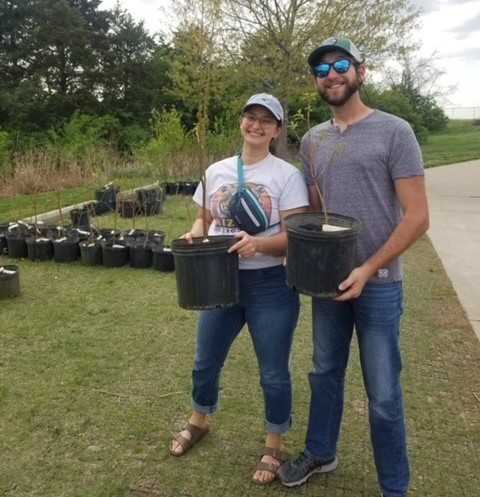
I was able to participate for the first time this year with the April 22 pickup date matching my schedule, and the discovery of a rogue pear tree in in my woods last summer. I marked the menace and returned this spring to make the fatal cut.
State residents who remove a Callery pear tree from their property can receive a free native tree from one of more than dozen locations. Participants must register before April 17 and provide a photo of the tree they eliminated. For more information and registration, visit moinvasives.org.
The expanded list of pickup locations includes Park Hills this year, where I will be getting my new green hawthorn. The 3-gallon nursery stock won’t immediately stack up to the 20-foot tree it replaced, but it will be the right size and time of year for replanting.
As the old proverb proclaims, “The best time to plant a tree was 20 years ago. The second best time is now.” Anytime in April is actually very good. It’s the reason the month hosts Arbor Day and Earth Day.
I certainly won’t miss the wild-in-the-woods tree I’m trading in, so I know it would be much more difficult for those who have big flowering beauties in their yards. But the trouble they cause can not be understated.
Bradford pear trees and their relatives proliferate rapidly through seed dispersal and vegetative means. They quickly form dense thickets and choke out native trees and plants, according to the conservation department. Because they produce their buds and leaves earlier than other plants each spring their growth shades out opportunities for wildflowers and other species.
Among the replacement trees suggested by the department are American plum, flowering dogwood, eastern redbud, hawthorn and service berry, which are all spring bloomers and native species.
The hawthorn and dogwood were listed as available at Park Hills when I registered for my tree, but now are both marked sold out. Other options at the St. Francois County location include black gum, cherry bark oak, elderberry and white oak trees.
The buyback program began in St. Louis and Columbia in 2019 and has expanded to include 17 locations this year. In 2024, 630 donated trees were distributed around the state in return for the elimination of Callery pear trees.
There is no argument that the abundant white flowers are pretty, and as a sign of spring they give hope to a near future of warmer weather, but the beauty is truly in the eye of the beholder. They are stinky, their falling fruit stains sidewalks, and as mentioned earlier, they do not hold up well against the weather.
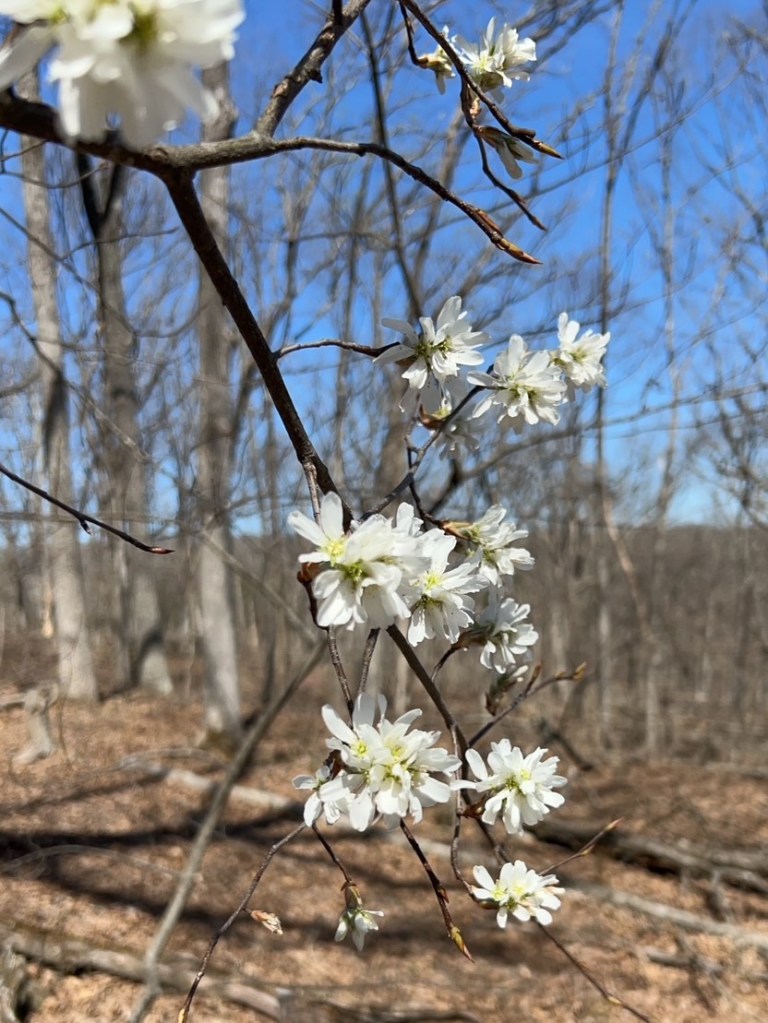
And there are much better options. On a recent hike south of Festus, I spotted a few serviceberry trees with clusters of bright white flowers. The puffy balls of white stood out in the gray wood landscape. As a native species they were much more appealing than the annual roadside clutter of the rogue Bradford pears.
John Winkelman has been writing about outdoors news and issues in Jefferson County for more than 30 years and was the Associate Editor for Outdoor Guide Magazine.
 Don't Call Me Outdoor John