FeederWatch project collects data for continental bird research

The chickadee is usually the first bird to arrive once backyard feeders get refilled.

There is never a bad time to help a good cause, so the required donation to the Cornell Lab of Ornithology was not a barrier to keep me from joining a program called Project FeederWatch. One week into my membership, I already consider it $18 well spent.

My obsession with the birds that flock to my backyard feeders is well documented. I can watch for hours through a number of different windows or from my favorite perch on our screened porch. Throughout the year, the time I spend spying on my feathered friends accumulates obsessively.

Now I get to put those avian observations to work in the name of citizen science. From November through April thousands of FeederWatchers like me from all over North America report information on the birds they see at their homes or out in their communities.

For now I have only added the feeders in my backyard for reporting, but the program allows me to identify as many locations as I can track regularly. Even though FeederWatch is the project’s name, supplemental food sites are not a requirement. The instructions say you may pick public parks, nature centers, community areas, and obviously any private property you have permission to access.

During November and December I spend time in several different deer hunting stands. While I am focused on something big and brown visiting my vicinity, I do a lot of bird watching on those outings. My last hunting trip did not include any deer, but I did see wild turkeys and five different woodpecker species, including several cool looking redheaded woodpeckers, which prefer forested areas over backyard feeders.

I saw many other common birds from my post, but the highlight was a tiny brown creeper that worked its way up the big sycamore tree that holds my stand, less than six feet from me. The little bug-eater is uncommon in Missouri in the winter and not shown in Jefferson County on the state Department of Conservation map.

Back to the backyard. I did my first official count for Project FeederWatch this past weekend. The process is simple. For two consecutive days you tally the number of each bird species you see simultaneously. It is not a running total, but the maximum number counted of each bird type at one time. I reported 11 different species that included a group of seven tufted titmice, five northern cardinals, five chickadees, and nothing as exciting as the tiny creeper from the woods.

Project FeederWatch is not about the rarities. It is looking to gather information on population trends for all birds. While it would be bad news, reporting no birds is an option, and important because it provides evidence of potential declines.

The program requires that I wait at least five days before my next report. Three days after my first count, I looked out the window to see 13 northern cardinals at one time. The five-day wait is intended to avoid bias in the data, caused by choosing to count only on big bird days. There is no minimum number of counts per site each year, but it is recommended that you complete as many as possible.

In addition to bird data, the counts ask about snow cover during the reporting period. The Cornell Lab has access to data on temperature, rainfall and wind speeds for a specific area, but snow depth can be variable. Participants also track mammals seen near the feeder including cats, dogs, squirrels, and any other creatures. It also asks about birds that may appear to have eye disease, and for reports about dead birds or those that are attacked by predators.

Members receive tally sheets and others tools, a poster of common feeder birds, a calendar, digital access to Living Bird magazine, and annual Winter Bird Highlights reports dating back to 2005. The annual fee of $18 makes the program possible, paying for website and database maintenance, data analysis, printing, and distribution of information.

For more details on participation, visit feederwatch.org. If you are looking for a last minute Christmas gift idea, you can enroll your favorite bird watcher.

John Winkelman has been writing about outdoors news and issues in Jefferson County for more than 30 years and was the Associate Editor for Outdoor Guide Magazine.
Annual Geminid meteor shower will peak this weekend

One of the outdoors’ greatest shows not on Earth takes place this month and will reach its performance peak this weekend. The display will go on regardless of the weather, but in order for us to enjoy it, clear skies at night are necessary.

The editors at EarthSky.org predict the peak of the Geminid meteor shower for 2025 at 9 p.m. on Saturday, Dec. 13. Anytime that it is dark and clear this weekend, those bold enough to brave the cold can see up to 120 meteors per hour in the southern night skies.

Each year the earth’s orbit passes the path of an asteroid known as 3200 Phaethon and as the particles of debris hit our atmosphere they vaporize and light up in the sky. Parts of the star-studded show may be visible from mid November to late December, but this weekend is when the action is the fastest.

The meteor shower is named for the constellation Gemini because Castor, the cluster’s bright star, is near the point where the “shooting stars” appear to radiate from. In reality, the star is not close at all to the meteor path. Castor is about 52 light years (more than 300 trillion miles) away. The asteroid debris burns up in the edge of earth’s atmosphere about 60 miles overhead.

If identifying zodiac shapes in the stars is too tricky, this year the shower’s center will also be near the planet Jupiter, which outshines almost all the other heavenly bodies in the sky. The waning crescent moon is not set to rise until 1 a.m. on Dec. 13, so the sky will be totally dark more than half of the night.

According to the EarthSky.org post, the orbit of 3200 Phaethon passes between the sun and Mercury, and follows its path past Mars leaving a trail of material for the Earth to pass by every year in December.

People hoping to spot the falling stars don’t need to be looking directly at the center of the source to see glowing streaks of light, but if the path of each is followed backward, “you will find that it comes from the radiant point,” the post states.

The best viewing time is around 2 a.m., but the real key is finding a dark sky location to setup for viewing. The Observatory at Jefferson College offers a centrally located spot in Jefferson County, but any place away from city lights can provide deep darkness for optimal action.

Several Missouri State Parks are hosting special events on Saturday, Dec. 13, for stargazing. From 5 p.m. to midnight at Elephant Rocks State Park in Belleview, guests are invited to join a team of park naturalists. No telescopes or binoculars are needed, but it’s important to dress for the weather. Portable chairs and blankets are recommended.

Echo Bluff State Park in Eminence has activities planned beginning with gingerbread classes from 1 to 3 p.m., live music in the Great Room at the lodge from 5 to 7 p.m., and s’mores and hot chocolate from 6:30 to 7:30 at the fire pit behind the lodge. The rest of the evening will be dedicated to watching the night’s light show.

Bennett Spring State Park in Lebanon will hold a program that begins in the nature center at 8 p.m. with a short presentation and information about the best viewing locations. For more astronomy-related events, visit mostateparks.com/astronomy.

Written by editors Deborah Byrd and Marcy Curran, the EarthSky.org blog credits the American Meteor Society (amsmeteors.org) for the shower predictions. They also provided a list of handy tips for meteor watchers:

  • find a dark, open sky
  • watch back-to-back with a buddy to cover the whole sky
  • plan at least an hour of viewing time to give your eyes to adjust
  • unpredictable meteors come in bursts and lulls
  • and leave your electronics at home, the screens can affect your night vision.

The summer’s Perseid meteor shower may be more popular because August’s weather is generally preferable to December for sitting outside, but the rate of meteors per hour is higher during the Geminid event. The Old Farmer’s Almanac says that Perseid produces an average of 50 per hour, while the Geminid group is good for an average of 75 every 60 minutes.

John Winkelman has been writing about outdoors news and issues in Jefferson County for more than 30 years and was the Associate Editor for Outdoor Guide Magazine.
Walk in the park to highlight “Benefits of Nature”

A quaint place to walk in the woods hides in plain sight along Sappington Road in Sunset Hills.

“You know where Knob Noster State Park is, don’t you?” a friend asked me earlier this week.

“Just east of Warrensburg,” I replied confidently. I take pride in being able to identify and locate public places throughout Missouri where you can get out and enjoy the outdoors. I have visited more than half of the almost 100 Missouri State Parks and historic sites, and recognize most of the other’s names.

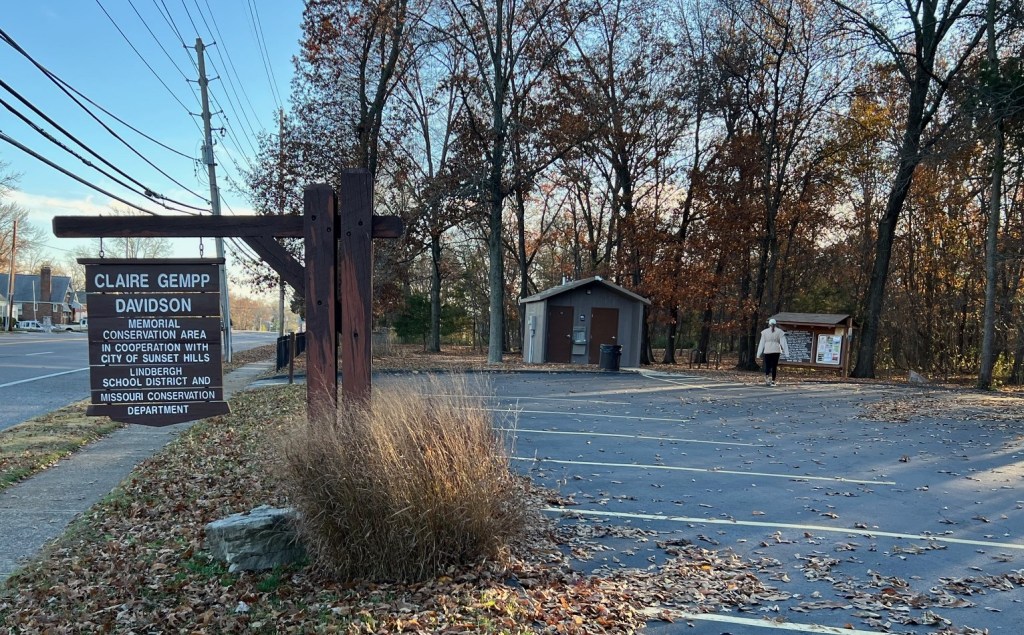
So I was surprised when I saw a notice about an event at a place that didn’t sound familiar. Claire Gempp Davidson Memorial Conservation Area must be in some far flung corner of the state, I thought. No, it’s in Sunset Hills, on Sappington Road between Gravois and Eddie and Park. Basically in our neighborhood.

I went to visit the 13.5-acre park over the Thanksgiving Day weekend, which was coincidental because decades ago when my family visited South County for the holiday, my brother-in-law Dan and I would escape the crowd and find a place to hike around that same area near Grant’s Farm.

Those long ago walkabouts took place before the property was conveyed to the state Department of Conservation in 1992. Marjorie Elizabeth Gempp willed the natural area to the state in memory of her sister Claire, who died at age 26.

Managed by the city of Sunset Hills, the green space is a sweet oasis in a busy residential and commercial area. The trails wind through the woods on a thick carpet of wood mulch chips. A short spur trail leads to the adjacent elementary school providing access to a natural outdoor classroom.

The entire property is almost pancake flat, so elevation change is not an issue, and every step is easy. The paved parking lot and running water restrooms (closed for winter) put the park ahead of more rustic options.

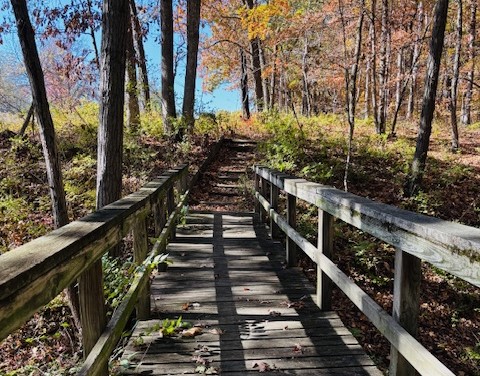
A sturdy boardwalk bridge crosses the wetlands pond at Claire Gempp Davidson Memorial Conservation Area in Sunset Hills.

The best feature along the trails are the consistent tree identification signs and informational kiosks. The first one I encountered highlighted the dangers of invasive species. I did have to look at the names on several of the trees, but I had no trouble identifying the honeysuckle bushes that were unfortunately prolific in the suburban setting. Many of the identified trees were impressive examples of their species including huge black cherry, persimmon, white oak and eastern red cedar trees.

A sturdy boardwalk bridge passed through the wetlands area pond with its towering bald cypress trees. A small prairie area completed the wildlife area’s natural diversity. There are plenty of learning opportunities with each step.

The upcoming special event at the park is billed as a “Benefits of Nature Walk” at 10 a.m. on Saturday, Dec. 13. “You’ll learn to harness the benefits of nature to expand your senses and improve, recalibrate, and restore physical and mental well being,” the department press release said.

Of course any chance to get outdoors provides the biological boost that is delivered by fresh air, sunshine, and escape from the confines of the everyday grind. The scheduled walk at the wildlife area provides the extra bonus of a conservation department naturalist as a guide.

The press release touted nature as a means to reduce stress levels and blood pressure, and improve your immune system. “During the journey, discussions will focus on ways you can use the woods, your yard, or even a window to help receive the benefits of nature during the winter months, or any time of the year.”

The event is scheduled for two hours and will include stops along the way for group members to absorb their surroundings. The press release recommended bringing a towel or other pad for sitting on at the stops.

The Benefits of Nature Walk is free, but advanced registration is required. To sign-up for the event visit http://short.mdc.mo.gov/oJU. The guided walk is limited to 12 participants.

John Winkelman has been writing about outdoors news and issues in Jefferson County for more than 30 years and was the Associate Editor for Outdoor Guide Magazine.

Old almanac will continue to provide annual predictions

Since I am a frequent shopper at Buchheit in Herculaneum, my wife Kelly will tell you that it was not so coincidental that I was in the store on the same day I heard the news that the Farmers’ Almanac was ceasing publication.

I had just seen a display rack full of the familiar, yellow-covered publications. It couldn’t be true. For more than 230 years The Old Farmer’s Almanac has been providing weather forecasts, planting guidance and much more in a handy guidebook. These days I even get regular emails from almanac.com with interesting updates.

The original Old Farmer’s Almanac will continue to be published “for generations to come.”

The original, established in 1792 by Robert B. Thomas, is not going anywhere. The announcement on Nov. 6 was in regard to the Farmers’ Almanac, which was established, and published since 1818.

“It is with a heavy heart that we share the end of what has not only been an annual tradition in millions of homes and hearths for hundreds of years, but also a way of life, an inspiration for many who realize the wisdom of generations past is the key to the generations of the future,” said editor Sandi Duncan in a posted press release.

As sad as it is to report on the demise of any business, and in particular a long-serving and well-respected publication, I am glad to know it was not my little golden book that is going away. The same day as the announcement, The Old Farmer’s Almanac issued a press release of its own.

“As sure as the seasons change, we will continue to publish our annual edition – with our much anticipated weather forecasts – in print and digital for generations to come,” the email stated.

I have never been much of an advocate for the credibility of their weather predictions. I barely trust the guys who come on in the morning with first alerts about what their models tell them will happen in the afternoon. The almanac’s generalities and regional approach make the forecasting success similar to that of a broken clock, which is right twice a day.

So pardon my reluctance to confer with its weather prognostications, but I always find the periodical contains plenty that is “useful, with a pleasant degree of humor,” as the original claims on its cover.

Inside edition No. 234, the 2026 version includes several feature stories that stood out to me. The Healing Power of Honey backs up the folklore behind the natural cure-all with modern medical discoveries and tested remedy recipes. The essay on space junk included frightening facts about 130 million pea-sized pieces, and 29,000 orbiting objects larger than 4-inches, “moving far faster than high-velocity bullets.”

My favorite story was a sports special report about the summer of 1941, when Joe DiMaggio set his 56-game hitting streak record, and Ted Williams batted .406, the last time any hitter topped the .400 mark. “It all happened one summer when America needed to believe in heroes.”

My parents and grandparents relied on the almanac’s guidance for garden planting. Its “Planting by the Moon’s Phase” chart on Page 230 provides the best dates for about 40 vegetables and crops including everything from barley to zucchini. The moon signs also offer suggestions for the best days each month to quit smoking, brew beer, get a hair cut, harvest crops, wean pigs, wash windows, and more than three dozen other activities.

I’m not sure about the veracity of those claims, but if they were good enough for my mom and Grandpa Joe, I am willing to confer with the book for planning my planting.

Where I do find my almanac most reliable are in its astronomy listings. Page 102 says 2026 will have two solar eclipses that will not be visible from most of North America and two lunar eclipses that viewing will depend on how close to each coast you happen to be. On March 3 the total eclipse of the moon will be best viewed in central and western United States. The partial lunar eclipse on Aug. 27-28 will be a better show from an Atlantic shore.

Save the Dates on Page 152 says the next total solar eclipse visible in North America will be August 23, 2044. I hope The Old Farmer’s Almanac and I are still around for that.

John Winkelman has been writing about outdoors news and issues in Jefferson County for more than 30 years and was the Associate Editor for Outdoor Guide Magazine

Trout fishing opportunities return for winter season

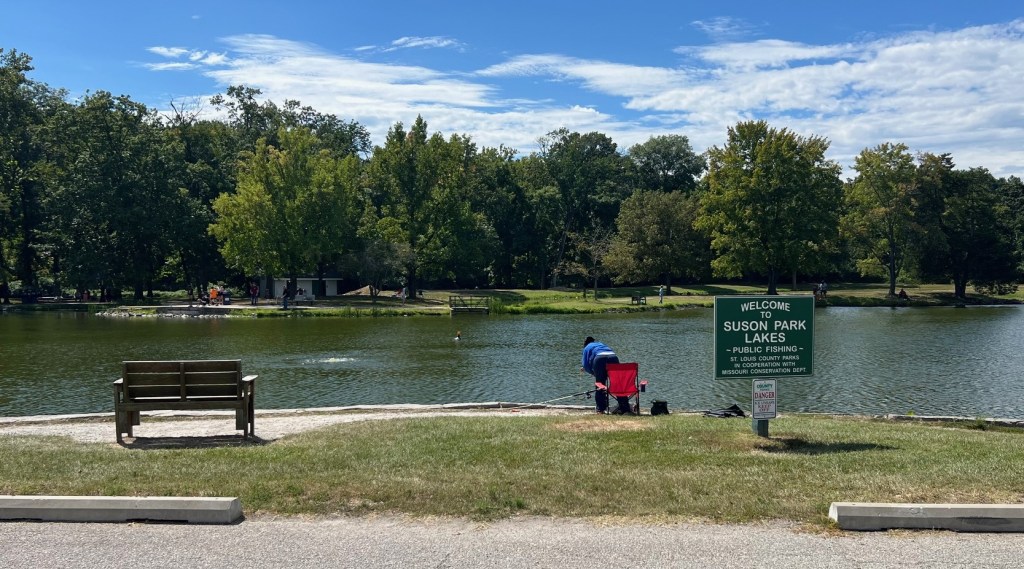
The first stocking of the year released more than 750 rainbow trout on November 5 at Island Lake and Carp Lake at Suson Park in south St. Louis County.

While most of the focus this time of year is on hunting, a popular fishing season has opened to provide opportunities for anglers close to home and in their favorite spring and summer streams around the state.

November 14 was opening day for catch and release fishing in Missouri’s four trout parks, and the hatchery raised fish have arrived at several parks in the St. Louis area and from southeast to northwest Missouri.

Closest to home for Jefferson County residents are the two lakes at Suson Park in south St. Louis County. Named Island Lake and Carp Lake, the two side-by-side ponds host many anglers all year long. Both have significant amounts of accessible shoreline.

The two lakes were stocked for the first time on Nov. 5, with 190 rainbow trout released in the smaller Carp Lake and 569 in Island Lake, according to the state Department of Conservation‘s fish stocking hotline: 636-300-9651. The telephone service is updated immediately after each fish delivery. The recording includes the date and number of fish stocked at each lake.

Anglers are limited to using only one fishing pole and may use any type of bait or lure. They must have a valid fishing license, and an annual trout permit is required for those who chose to keep their catch. Anglers have to stop fishing as soon as they catch their daily limit of four fish.

Some special considerations for trout fishing tackle include using very light line and small hooks and weights. Trout feed by both sight and smell, colored and scented baits are popular. Because the hatchery-raised fish have lived and grown on a diet of small brown pellets for their whole lives, locally produced dough baits are effective.

A hand-held dip net is an essential piece of equipment because the light line is prone to breakage as it nears the shore or is pulled out of the water. Ultralight spinning reels and rods are designed to handle the lightweight line that is recommended for trout fishing.

Other St. Louis area lakes that allow anglers to keep their catch throughout the winter season include Boathouse Lake in Carondelet Park, Gendron Lake in St. Ann, Jaunary-Wabash Park lake in Ferguson, O’Fallon Park lake in St. Louis city, Vlasis Park in Ballwin, and lakes 3, 22 and 23 at the August A. Busch Conservation Area in St. Charles County.

Seven other lakes in the program have been stocked for catch-and-release fishing only until January 31. Anglers are limited to one fishing pole and may only use flies, artificial lures and unscented, soft-plastic baits. After February 1 all types of lures and baits may be used by pole and line fishermen.

The catch-and-release lakes include Jefferson Lake in Forest Park, Koeneman Park Lake in Jennings, Tilles Park Lake in St. Louis County, Union City Lake in Franklin County, Walker Lake in Kirkwood, and lakes 7 and 21 at the Busch Conservation Area.

Missouri’s four trout parks also allow catch-and-release fishing through the winter months. From Nov. 14 through Feb. 9 anglers can fish at Meramac Springs near St. James, Bennett Springs at Lebanon, Montauk in Salem, and Roaring River State Park in Cassville. Anglers may only use artificial flies for bait and must have a fishing permit and trout tag.

The catch-and-release season at the trout parks closes in early February to allow time before the annual opening day celebration on March 1.

John Winkelman has been writing about outdoors news and issues in Jefferson County for more than 30 years and was the Associate Editor for Outdoor Guide Magazine.
LaBarque Creek Conservation Area near Eureka expands

The pristine LaBarque Creek gets more protection with the expansion of the conservation area that bears its name.

A recent purchase expands one of Jefferson County’s most interesting outdoors attractions. The LaBarque Creek Conservation Area near Eureka added 15 acres that includes about a half-mile of the property’s namesake LaBarque Creek.

The land purchase was approved by the state Conservation Commission at its meeting in April and closed in September. According to a press release from the state Department of Conservation, the purchase was made by Open Space STL through donations from the Mysun Charitable Foundation and the Robert Trulaske Jr. Family Foundation.

Protection of the LaBarque Creek watershed is considered a priority in the St. Louis region because of the pristine nature of the area and the diversity of species that call the stream home. A little more than 10 miles long, the tributary of the Meramec River is completely in Jefferson County.

The area outlined in red marks the 15 acres added to the LaBarque Creek Conservation Area.

In addition to the 1,285 acres of watershed in the expanded LaBarque Creek Conservation Area, public property protects land and water that begins at the stream’s headwaters in the adjacent Don Robinson State Park (800 acres). Two other conservation areas near the creek’s confluence with the Meramec River cover almost 2,000 acres, Hilda J. Young (1,300 acres) and Myron and Sonya Glasberg Family (634 acres).

At least 54 species of fish live in the creek, and the biodiversity of other aquatic life is almost three times greater than any of the 15 other Meramec River tributaries below LaBarque, the department press release said.

“Thanks to its incredible ecological diversity and the pristine habitat it provides, LaBarque Creek is a true aquatic gem in our region,” said Gary Calvert, the administrator for the conservation department in the St. Louis area.

Founded as the Open Space Council in 1965, the independent agency works collaboratively with other organizations and government entities to conserve and sustain natural resources.

“This LaBarque Creek Conservation Area expansion builds on Open Space STL and MDC’s shared efforts to protect the LaBarque Creek watershed. We’ve previously partnered to expand nearby Young Conservation Area in 2021,” said Open Space STL executive director Bonnie Harper.

The 15-acre tract was sold by Jenna Walls.

“Our family always felt we were so very lucky to be the stewards of a part of this magical valley, and I personally feel that sharing that magic with others is this land’s greatest purpose,” Walls said. “After watching the MDC for 20 years on LaBarque Conservation Area, I came to understand their care and dedication to preserving natural lands for our beautiful state. They should be the next stewards of this precious area so many can experience its power in perpetuity.”

LaBarque Creek Conservation Area has a three-mile hiking trail that follows the creek for a short distance then climbs the hills with a 300-foot elevation change. The natural surface trail includes several ups and downs before returning to the trailhead at the area parking lot on Valley Drive off Doc Sargent Road about seven miles southwest of Eureka.

John Winkelman has been writing about outdoors news and issues in Jefferson County for more than 30 years and was the Associate Editor for Outdoor Guide Magazine.

Never Lose Touch program encourages people to get outdoors

The sandstone canyon at Don Robinson State Park near Dittmer may be the most peaceful public place in Jefferson County.

An initiative from the state Department of Conservation invites people of all ages to connect with the outdoors or find their way back outside through a number of activities and multi-media opportunities.

Never Lose Touch provides encouragement to people who remember halcyon days in the woods or on the water, and anyone who has watched the wild from afar. Suggestions to get started include new media like smartphone apps, a podcast, a Spotify playlist, and a YouTube channel.

The program is not all electronics-based. Traditional avenues like the free Missouri Conservationist magazine and Discover Nature educational events are still key components. Some hands-on suggestions for maintaining connection with the outdoors include landscaping with native plants and nature journaling.

At the heart of the Never Lose Touch concept are the many health benefits of enjoying the outdoors. The conservation department program announcement recommends a daily dose of nature “to refresh and de-stress” with perceived or proven benefits.

Advantages from visiting a park, the woods, or even your own backyard include reduced blood pressure, a healthier heart rate, and lessened muscle tension; an escape from busy schedules provides a sense of calm and well-being; a brain boost from the fresh air can be “comparable to a cup of coffee”; and a hike in the woods can increase attention span and problem-solving skills, the archived Conservationist article states.

Our ever-present smartphones make capturing images of our outings easier than ever. Conservation department photographer David Stonner offers tips to take better pictures.

“The golden hour is right around sunrise or sunset when the light drops low in the sky,” he says. “Everything starts to glow and the shadows are not as harsh. So searching out the right light and interesting angle on your subject is far more important than whatever equipment you are using.”

Another suggestion from the state announcement of the program is a relatively new Japanese custom that sounds more like an ancient ritual. Forest bathing dates to the 1980s and is about unplugging and breathing in the natural world around you.

“The key is to find a quiet spot to yourself. Take some slow, deep breaths. Clear you mind of distractions and use your senses to take in the sounds, smells, and sights of nature – everything from the daylight streaming through the trees to velvety moss on the rocks and the chatter of birds and other wildlife. Relax and let nature wash over you.”

Jefferson County is blessed by multiple places that make for quick escapes to the outdoors. Peaceful, forested areas can be found at city parks in Arnold, De Soto, Festus, Herculaneum, and Hillsboro. Mastodon State Historic Site in Imperial includes a wildflower area, creekside habitat, and glorious high ground for hiking.

Don Robinson State Park near Dittmer is almost all woods with great trails that can take you far away from the daily grind. Labarque Creek, Hilda J. Young, and the Myron and Sonya Glassberg Family conservation areas in the northwest corner of the county extend the area of mostly unspoiled woods from Cedar Hill to the Meramec River.

Although they can get busy anytime of the year, Valley View and Victoria Glades natural areas near Hillsboro provide peaceful isolation most days of the week. Their shared topography make the places unique, and the expansive scenic views are a perfect for soaking up the real world.

Whether your outdoor experiences are memories from a long ago childhood, or you are looking to connect with nature the first time, your mental and physical well-being can be linked to keeping in touch.

John Winkelman has been writing about outdoors news and issues in Jefferson County for more than 30 years and was the Associate Editor for Outdoor Guide Magazine.

Mandatory hunter education has changed with the times

Long-time hunter education coordinator Bill Seibel checks the scores for a young hunter while a long line of others wait to receive their test results at Jefferson College in 1997.

While it may be too soon to call it waxing nostalgic, I have been thinking about the history of hunter education in Missouri. It was not that long ago that this time of year would present a calendar full of opportunities for new hunters to earn their certification.

Jefferson College offered the classes as part of its countywide Continuing Education program and community civic organizations from Selma Village to Pacific would host rooms full of young men and women every spring and fall. Classes held in the last few weeks before an upcoming hunting season would be packed.

What I remember most vividly are the scores of volunteer educators who gave their time and shared their enthusiasm for the sport. Jefferson County had teams of veteran hunters who taught safety and strategies for making every outing enjoyable.

Now the learning takes place through an online portal for most people who need to complete the course before purchasing hunting permits in Missouri and other states. Only young hunters, ages 11 through 15, must complete a skills portion in addition to the computer-based information program.

Those in-person classes are rare these days within 50 miles of Hillsboro, and none are currently scheduled inside the Jefferson County borders. Prior to the opening of the November portion of the firearms season on Nov. 15 there are only two more classes available. One is at the Busch Range on Tuesday, Nov. 4, and the closest one to home is planned from 5:30 to 8:30 p.m. on Wednesday, Nov. 5, at the Jay Henges Shooting Range near Eureka.

The hunter education course is required for any hunter born on or after Jan. 1, 1967. According to the state Department of Conservation, the program has reduced hunting accidents and deaths by 70 percent since it became mandatory in 1987.

In addition to responsibility and ethics, the course also includes instruction on firearms operations and safety, wildlife identification, game care, first aid skills, hunting techniques, wildlife conservation and management, and regulations specific to hunting in Missouri.

Two versions of the online course are available. A traditional textbook style course costs $24.95 and features hundreds of realistic illustrations and animations. The Interactive Knowledge Course is $39.95 and is more of a dynamic, video game experience built around real-life scenarios and situational challenges.

While the old curmudgeon in me longs for the days of senior citizen volunteers guiding young future hunters, the reality is that today’s teens learn much better through the technology they have grown up alongside.

Children ages 6 through 15 may hunt prior to earning their certification as long as they are in the immediate presence of an adult mentor. The mentor is required to have hunter education certification, and young hunters must be able to hold, aim and shoot the firearm or bow by themselves.

Missouri’s hunter apprentice program allows those older than 16 to hunt with a similarly qualified mentor. An Apprentice Authorization costs $10.50 and allows an inexperienced, non-certified hunter to purchase hunting permits. After two years, the apprentice must complete the hunter education course.

John Winkelman has been writing about outdoors news and issues in Jefferson County for more than 30 years and was the Associate Editor for Outdoor Guide Magazine.
Let’s Go Blues! Hunting and Fishing Night Oct. 21

Whether it’s sitting around the campfire listening to the Cardinals in the summer, or shooting the breeze with the boys in the fall, talking about the latest action on the ice, team sports and outdoors activities easily fit hand-in-hand.

The St. Louis Blues have announced a new theme night that combines the best of both worlds. Hunting and Fishing Night is scheduled Tuesday, Oct. 21, for a game against the Los Angeles Kings.

Fans who purchase theme-night tickets can choose a Blue Note logo cap in hunter’s orange or camouflage. All anglers and outdoor enthusiasts know there is no such thing as too many Day-Glo orange or camo hats. A portion of theme night ticket sales will be donated to conservation efforts.

In addition to action on the ice, representatives from Ducks Unlimited, Quail and Pheasants Forever, the Rocky Mountain Elk Foundation, and the Missouri Department of Conservation, will be available on site to provide information about their organizations and offer exclusive, enter-to-win prize packages.

For more information or to purchase theme tickets, go to stlouisblues.com/promotions and click the Hunting and Fishing Night link.

John Winkelman has been writing about outdoors news and issues in Jefferson County for more than 30 years and was the Associate Editor for Outdoor Guide Magazine.
Antlerless deer season allows hunters to put management skills to work

Early season antlerless deer hunting helps manage the herd and improves buck hunting chances later in the year.

Hunters who believe that we are the best deer management tool available get their first chance to prove the point this weekend. When the early portion of the antlerless hunting season opens on Friday, Oct. 10, hunters have three days to make a positive difference in many proven ways.

Holding out hope for the once-in-a-lifetime, magazine-cover megabuck is the thing deer hunter dreams are built on, but the real measure of success for keeping deer numbers in check is doe harvest. Taking antlerless deer in the early season can also improve the odds for that big boy showing up in mid-November.

First and foremost, doe harvest provides the true tool for population control. With an estimated statewide population nearing two million, there are few areas where the herd is not overwhelming its habitat. Removing females slows what has been exponential growth. Official estimates at the turn of the century were closer to one million deer in the state.

The National Deer Association offers five solid suggestions for harvesting does early in the season. The article by the organization’s chief communication officer, Lindsay Thomas Jr., was originally published in 2012, but its message resonates still.

1. Early in the season the pressure on all deer is low. The November portion of fall firearms season unleashes a half-million hunters in the woods. “By late season, does may be as wary as bucks, and just when you are ready to start shooting them, you don’t see any,” Thomas says.

2. There is less margin for error. When several antlerless deer are seen together in early October, it is easier to recognize the difference in size between adult does and fawns. While those young-of-the-year button bucks are legal targets, they are not the deer the season was designed to remove.

3. Hunter anticipation is high in October. Most of us have been waiting nearly a whole year for another shot. As autumn stretches into November, enthusiasm begins to chill along with the weather. Summer-like temperatures are not hunter friendly, but the potential for deep freezes in December are even less appealing.

4. Forage distribution was my favorite fact from the NDA article. “An adult doe requires about 6 to 8 percent of its body weight in forage every day,” Thomas says. That’s up to eight pounds of food for a 100-pound doe daily. If she is removed in early October, what she doesn’t eat is available for the deer that remain.

5. What does early doe harvest mean for bucks once breeding season begins?

“Taking does before the rut arrives will change the buck-to-doe ratio and can help intensify competition that year because there are closer to equal numbers of does and bucks,” Thomas wrote. “This means bucks have to be more active to compete for breeding opportunities, so they are more visible, and rut behaviors like chasing and fighting are more common.”

Hunters who put meat in their freezers in October can be more selective in November. Waiting for that big buck is easier when you know there is plenty of sausage already in storage. Other considerations for harvesting antlerless deer this weekend include supporting Share the Harvest deer meat donations and opportunities for expanded chronic wasting disease testing.

The antlerless portions of firearms season are open in all 114 counties in the state except for four in the extreme northwestern tip of the state and 10 in the Bootheel region. In 96 counties, including Jefferson, hunters may purchase and fill up to four antlerless-only firearms hunting permits during all seasons combined.

An any-deer permit for residents costs $18 for hunters 16 and older, and $9 for younger hunters. The antlerless-only permits are $7.50 each for adults and $3.75 for hunters age 15 and under. The late antlerless portion of the season is scheduled for Dec. 6-14. For more information visit mdc.mo.gov.

John Winkelman has been writing about outdoors news and issues in Jefferson County for more than 30 years and was the Associate Editor for Outdoor Guide Magazine.