While I realize that I do not have the qualifications or inclination to dispute all or even most of the misinformation that is widely shared these days, I am willing to try occasionally to be a voice of reason. And there is some significantly unreasonable news circulating these days.
Multiple times this spring I have seen on social media – and heard in-person from someone with similar insider-information – that venomous copperhead snakes love cicadas. The post goes on to warn people to keep their kids away from trees during the upcoming 13-year visit of our local brood of big bugs.
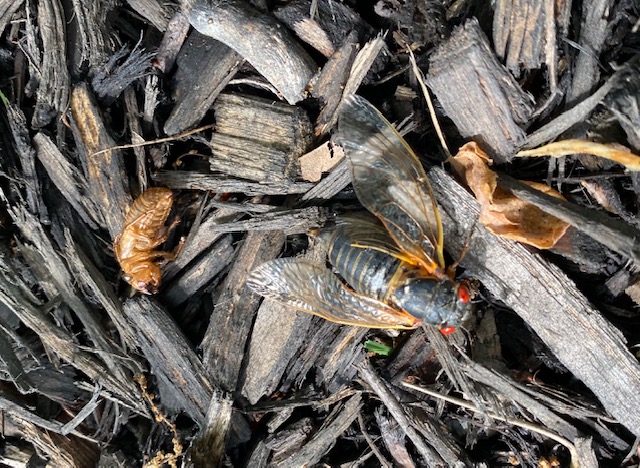
First of all there is no doubt that copperheads, like nearly every other species of reptile and most wild creatures from birds to bears, will gorge themselves on the big insects when they exit the earth in the coming days. But the likelihood of snake bites increasing because of it is preposterous.
The suggestion to keep your children away and protect yourself by avoiding trees is nearly as mind-boggling.
“Sorry kids, for the next six weeks are you much safer in the basement playing your video games.”
Young people face greater risks from watching YouTube. This is arguably the most beautiful time of the year; we should be encouraging everyone to get outside. Take someone toward the trees to look for cicada exoskeletons or maybe try to catch one of the harmless bugs for an up close evaluation. It will be 2037 before the chance will come back again. Kids should be prompted to find insects and other natural wonders.
The May edition of the Missouri Conservationist magazine has arrived, and it includes a photo feature and story about fireflies. The images captured by nationally acclaimed wildlife photographer Noppadol Paothong include an evening meadow aglow with lightning bugs and a detailed sequence of one of the insects taking flight.
Those sights are becoming increasingly rare as habitat loss, light pollution, and pesticide proliferation limits opportunities for kids to see the summer show. I can still joyfully remember chasing and catching lightning bugs with my cousins and friends, a long time ago.
“If a field where fireflies live is paved over, the fireflies don’t migrate to another field. They just disappear forever,” Paothong writes. “You can help them by creating habitat in your own backyard. It’s as simple as eliminating or reducing pesticide use, leaving leaf litter and wild edges for habitat, and reducing light pollution so they can find each other during the breeding season.”
Fortunately no one is purposefully killing lightning bugs. A few get left in jars for far too long, but they do not face the perils and persecutions of the aforementioned snakes. Even the venomous ones are much more likely to be victims rather than villains. Still people take pride and joy in killing them.

This time of year you may encounter snakes when you go outside, especially if you head toward woods and water. Earlier this month we had a big black rat snake visit our house. I think he or she was intent on investigating a nest of recent hatchlings in the wreath on our front door. To me, the excrement remnants that soiled the entryway were much less welcome than anything that five-foot long vermin killer could have brought to the porch.
To learn more about copperheads from a real expert, the state Department of Conservation is presenting a virtual program detailing five years of research at Powder Valley Conservation Nature Center. Ben Jellen, an associate professor of biology at the University of Health Sciences and Pharmacy in St. Louis, has been studying the snakes and will share his findings online from 7 to 8:30 p.m. on Friday, May 10. Advanced registration is required by calling 888-283-0364 or visiting short.mdc.mo.gov/48z.
The amount of misinformation easily available continues to proliferate, so it is important to find and support reliable sources.
John Winkelman has been writing about outdoors news and issues in Jefferson County for more than 30 years and was the Associate Editor for Outdoor Guide Magazine.
 Don't Call Me Outdoor John
Good article. Let’s bring kids out of their bedrooms and basements to explore nature. What a novel idea!
LikeLike